
The Lockheed P-38 Lightning - Yippee
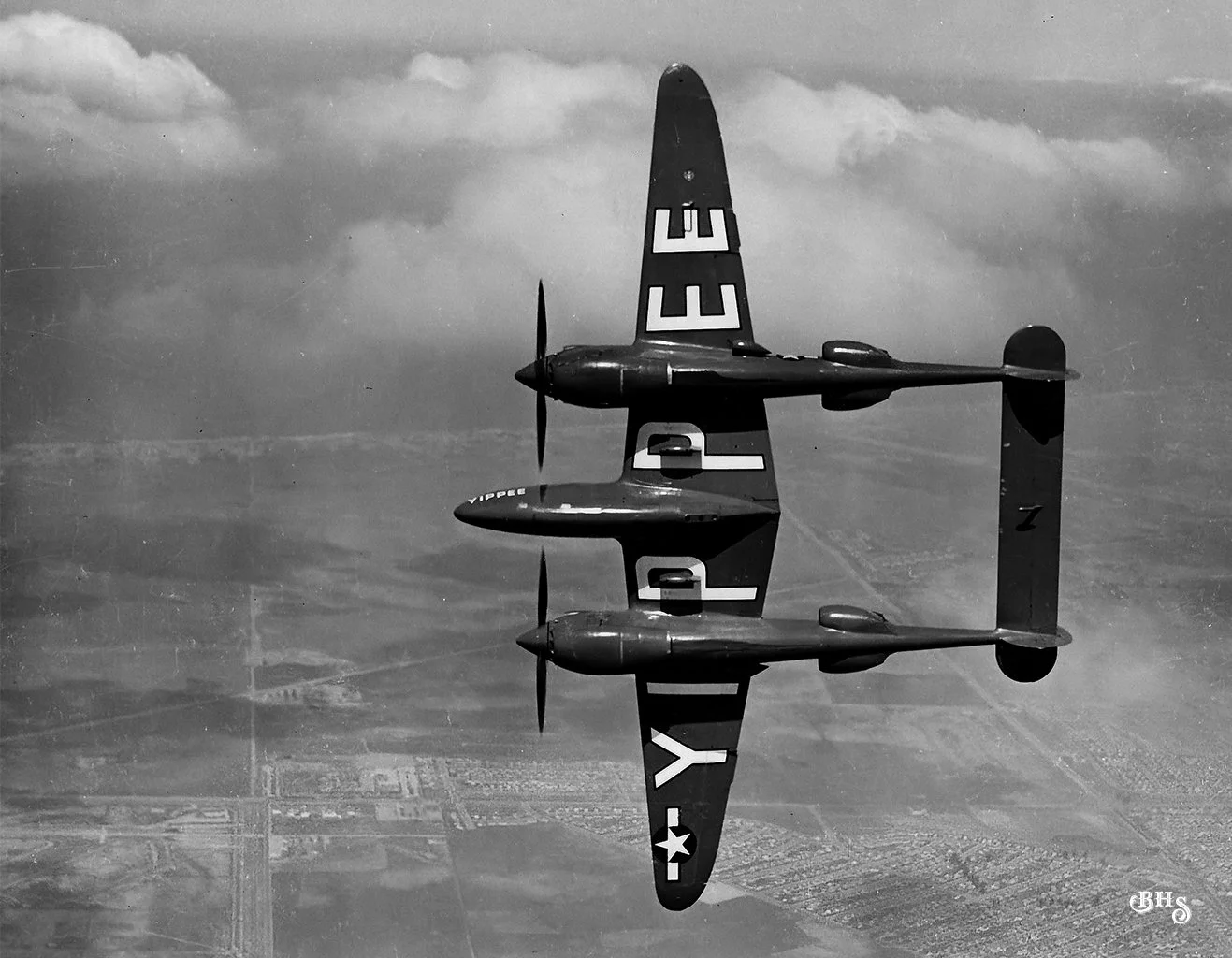
In the golden era of aviation, few aircraft captured the imagination quite like the Lockheed P-38 Lightning. With its radical twin-boom design, central cockpit pod, and devastating nose-mounted firepower, it earned a fierce reputation. German pilots in World War II famously dubbed it Der Gabelschwanz-Teufel—the Fork-Tailed Devil.
But in May 1944, as the 5,000th Lightning rolled off the assembly line in Burbank, California, Lockheed didn't coat it in the standard olive drab or bare aluminum. Instead, they created a vibrant, jaw-dropping piece of aviation history known simply as "Yippee."
The Birth of a Vermilion Legend
To celebrate reaching the monumental production milestone of 5,000 P-38s, Lockheed's factory workers and executives wanted to do something unforgettable. They took the freshly completed P-38J-20-LO (Serial Number 44-23296) and painted the entire airframe in a brilliant, glossy vermilion red (often described as a striking traffic or competition orange-red).
Across the undersides of the wings, the word "YIPPEE" was painted in massive, bold white letters. To add a personal touch, hundreds of the dedicated men and women who built the aircraft signed their names directly onto the vibrant paint before it was sealed.

Lockheed P-38 Manufacturing Burbank California
Dispelling the Myths at Treetop Level
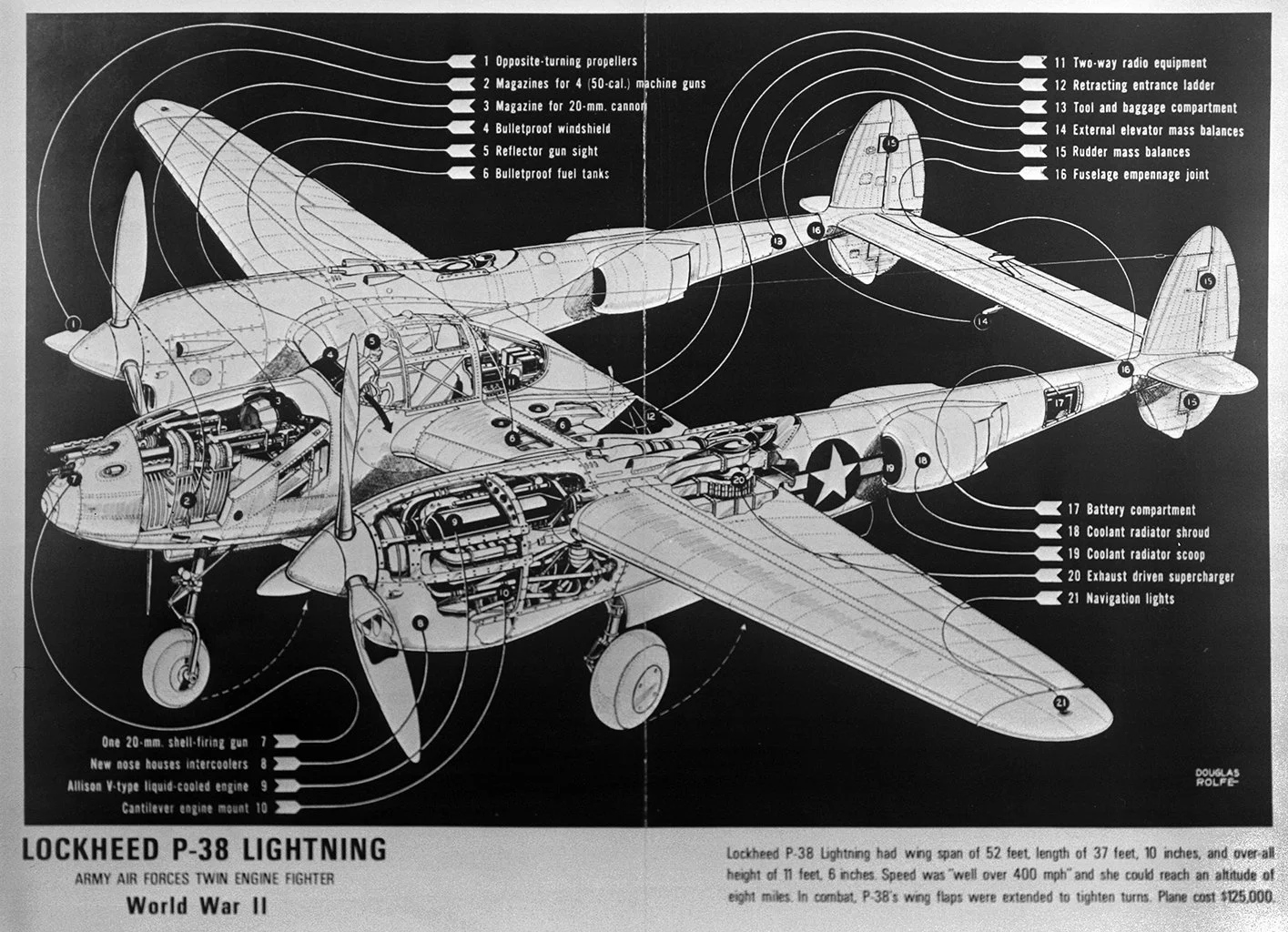
The P-38 was an incredibly advanced machine, featuring counter-rotating propellers and turbosuperchargers that gave it superb high-altitude performance. However, early versions suffered from various technical challenges, and rumors swirled among young military cadets that a twin-engine fighter was dangerously unmanageable if one engine failed.
Lockheed decided to use "Yippee" as the ultimate public relations tool to shatter those myths. They handed the keys to legendary Lockheed test pilots—including Milo Burcham, Jimmie Mattern, and the famous Tony LeVier.
What followed was a series of jaw-dropping low-level flight demonstrations at military bases across the country. LeVier and Burcham would scream past audiences at treetop level, feather one of the propellers to completely shut down an engine, and effortlessly perform smooth, graceful slow rolls into the dead engine. "Yippee" proved beyond a shadow of a doubt that the Lightning was not only incredibly safe, but spectacularly nimble in the right hands.
From Showstopper to Warfighter
Though "Yippee" started its life as a spectacular marketing icon, there was still a global war raging, and every single high-performance airframe was desperately needed.
Shortly after its publicity tour concluded, the vibrant red paint was stripped away. "Yippee" was repainted in standard military camouflage and shipped off to the Pacific Theater. It was assigned to the 475th Fighter Group ("Satan's Angels"), specifically the 431st Fighter Squadron, which was the only all-P-38 group operating in the Southwest Pacific at the time.
"Yippee" P-38J Fast Facts
Power Plant
2 × 1,425 hp Allison V-1710 V-12 engines
Max Speed
420 mph (676 km/h)
Armament
One 20mm Hispano cannon & four .50-caliber machine guns
Nose Advantage
Guns fired straight ahead (no wing convergence required)
Lockheed P-38 Lightning Diagram
Sadly, like many veterans of the brutal air war in the Pacific, "Yippee" didn't make it back home to a museum. On December 20, 1944, the aircraft had to abort a combat mission due to severe mechanical difficulty. A few weeks later, on January 29, 1945, it was permanently lost in an aerial accident—likely in the Philippines.
While the physical aircraft is gone, "Yippee" remains one of the most celebrated and beloved individual aircraft of World War II. For scale modelers and aviation enthusiasts alike, that blazing red P-38 with "YIPPEE" stamped across the wings stands as an eternal monument to the home-front workers who built America's legendary "Fork-Tailed Devil."
