
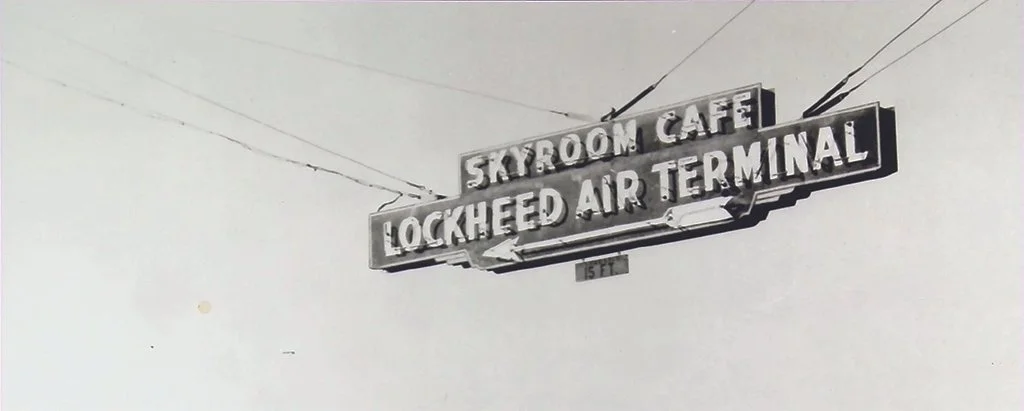
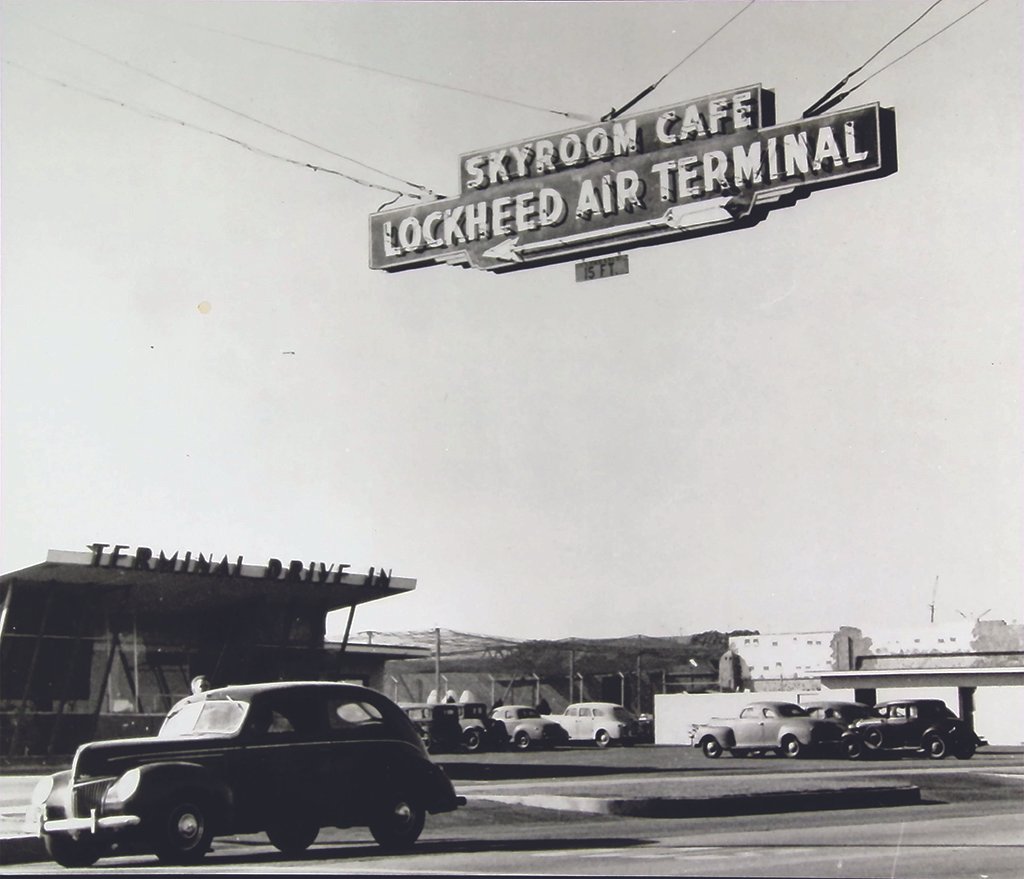
Long before airport food meant grabbing a shrink-wrapped sandwich at a crowded gate, going to the airport for dinner was a glamorous night out. In the 1930s and 1940s, few places captured that Golden Age magic quite like the Sky Room Cafe at the Lockheed Air Terminal in Burbank, California.
Perched directly above the bustling tarmac of what is now Hollywood Burbank Airport, the Sky Room wasn’t just a restaurant—it was front-row seating to the birth of modern commercial aviation and Hollywood’s golden era.
A Front-Row Seat to the Golden Age of Flight
When the terminal first opened in 1930 as United Airport (later renamed Union Air Terminal and then Lockheed Air Terminal in 1940), commercial air travel was still an exotic, thrilling spectacle. Locals dressed in their Sunday best just to watch silver-winged Douglas DC-3s and Lockheed Electras taxi, roar down the runway, and lift off into the San Fernando Valley sky.
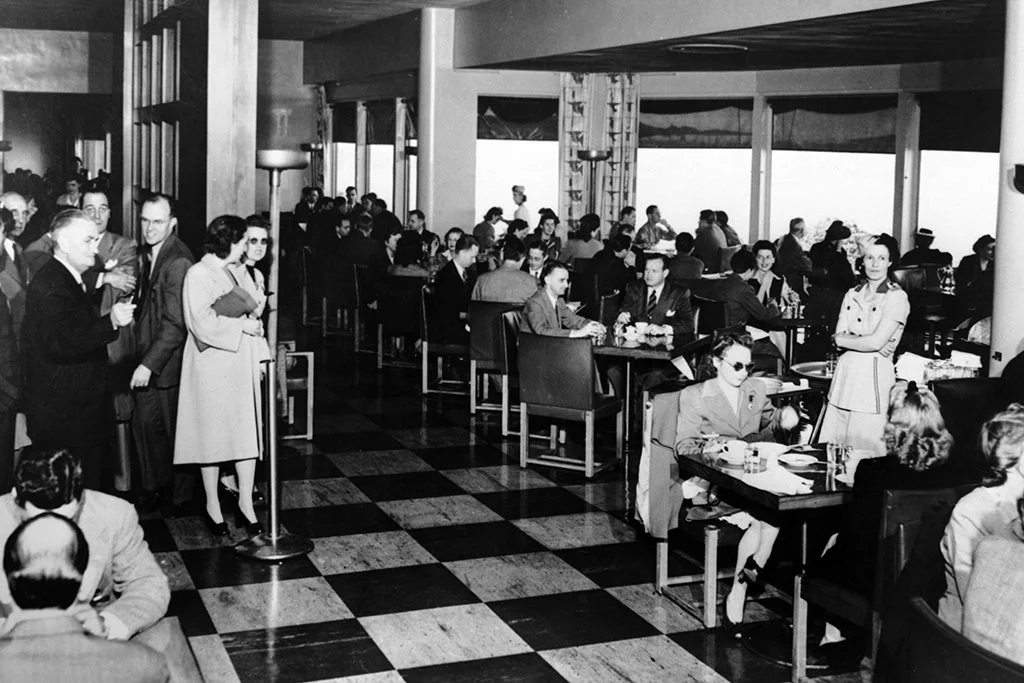
The Sky Room Cafe sat on the second floor of the Spanish Colonial Revival terminal building, designed to give diners an unobstructed panorama of the airfield and the Verdugo Mountains beyond. Framed by expansive plate-glass windows—and accompanied by an adjacent outdoor observation deck—guests could sip cocktails and dine on prime rib while propellers spun just yards away.
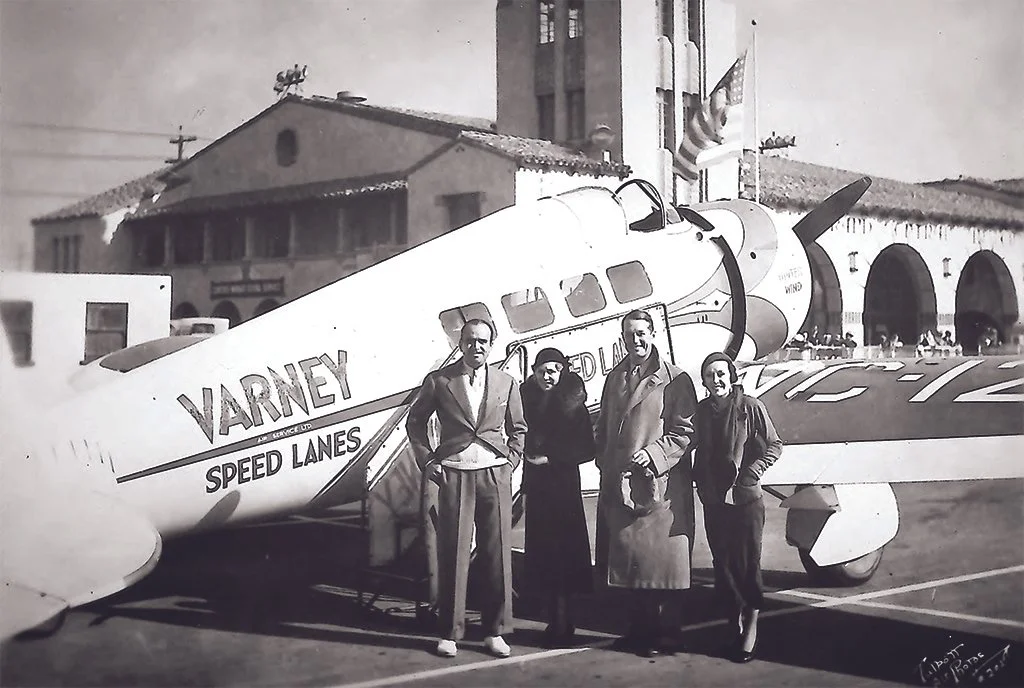
Douglas Fairbanks - Mary Pickford - Maurice Chevalier and Wife
Where Hollywood Met the Tarmac
Because Burbank was home to Warner Bros., Walt Disney Studios, and Universal just minutes down the road, the Sky Room quickly became an unofficial canteen for Hollywood royalty and aviation legends alike.
The Regulars: Screen icons like Clark Gable, Carole Lombard, Humphrey Bogart, and Bette Davis frequently passed through the terminal, often stopping at the Sky Room before boarding overnight sleeper flights to New York or returning from location shoots.
Aviation Pioneers: Amelia Earhart, Howard Hughes, and Lockheed’s own legendary aircraft designer Kelly Johnson were familiar faces around the terminal. Deals were sketched on napkins, test flights were toasted at the bar, and reporters lingered near the dining room hoping to catch a celebrity scoop by the boarding gates.
On-Screen Cameos: The terminal and its iconic airfield backdrop appeared in countless classic films, including the final farewell scene of Casablanca (1942), which famously used archival footage of a Lockheed Model 12 Electra Junior at the Burbank airfield.
Wartime Transformation and the Final Curtain
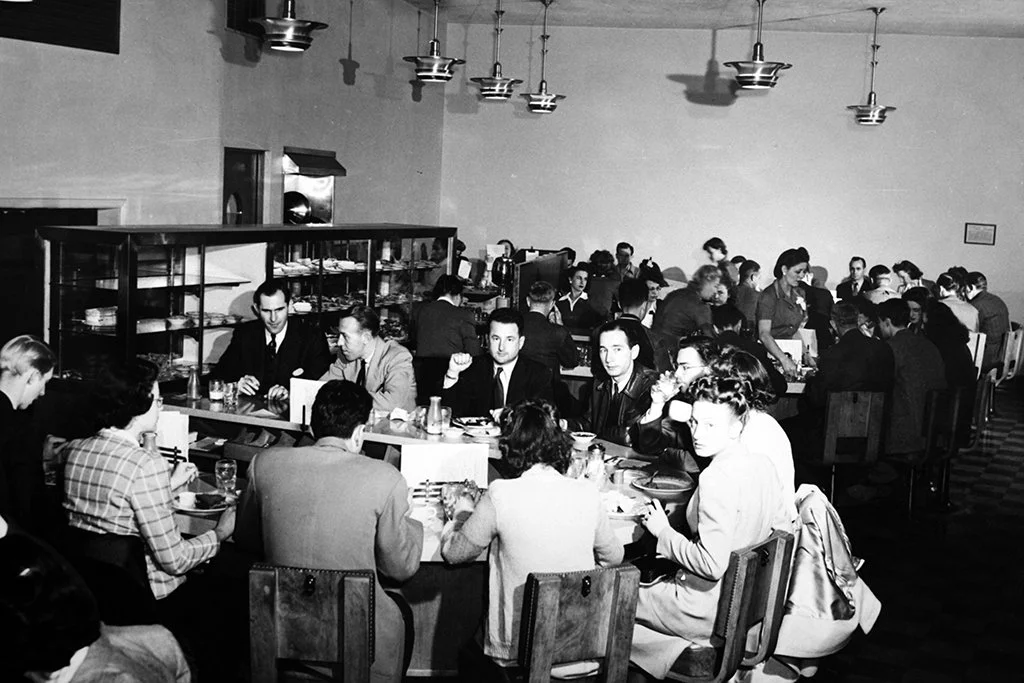
During World War II, the atmosphere around the Sky Room shifted dramatically. With Lockheed’s massive aircraft factories right next door churning out P-38 Lightnings and Hudson bombers, the entire terminal and surrounding runways were draped in elaborate camouflage netting—complete with fake houses, trees, and roads—to disguise the facility from potential enemy air raids. Inside, the Sky Room became a lively gathering spot for off-duty pilots, aircraft engineers, military brass, and USO entertainers passing through Southern California.
After the war, however, the rise of the jet age and booming passenger traffic transformed how airports operated. Larger aircraft, growing security requirements, and the need for expanded terminal facilities changed the layout of the airport. The Sky Room closed its doors in the late 1960s as part of major terminal renovations and expansion projects that converted the upper-level dining and observation spaces into administrative offices and operational facilities.
Later, tightened Federal Aviation Administration (FAA) runway safety and setback rules—combined with seismic concerns—ultimately sealed the fate of the original 1930 terminal building itself, which stood far closer to the active runways than modern regulations allowed and was eventually demolished to make way for safer, updated airport infrastructure.
Preserving a Piece of the Past
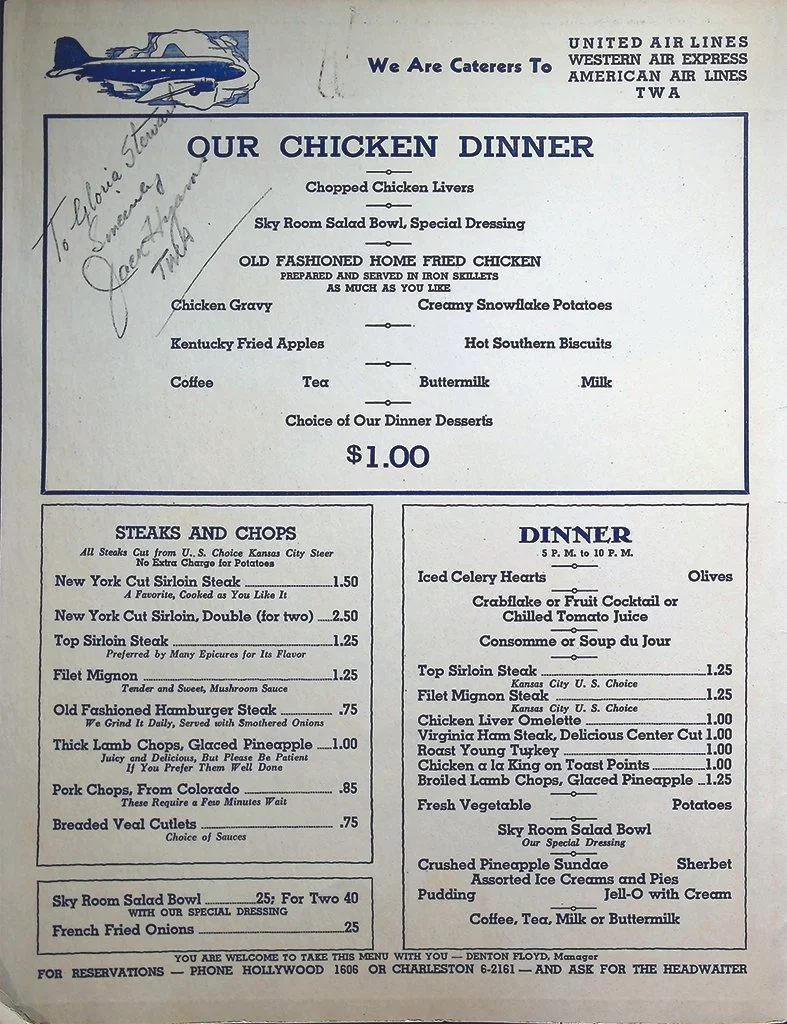
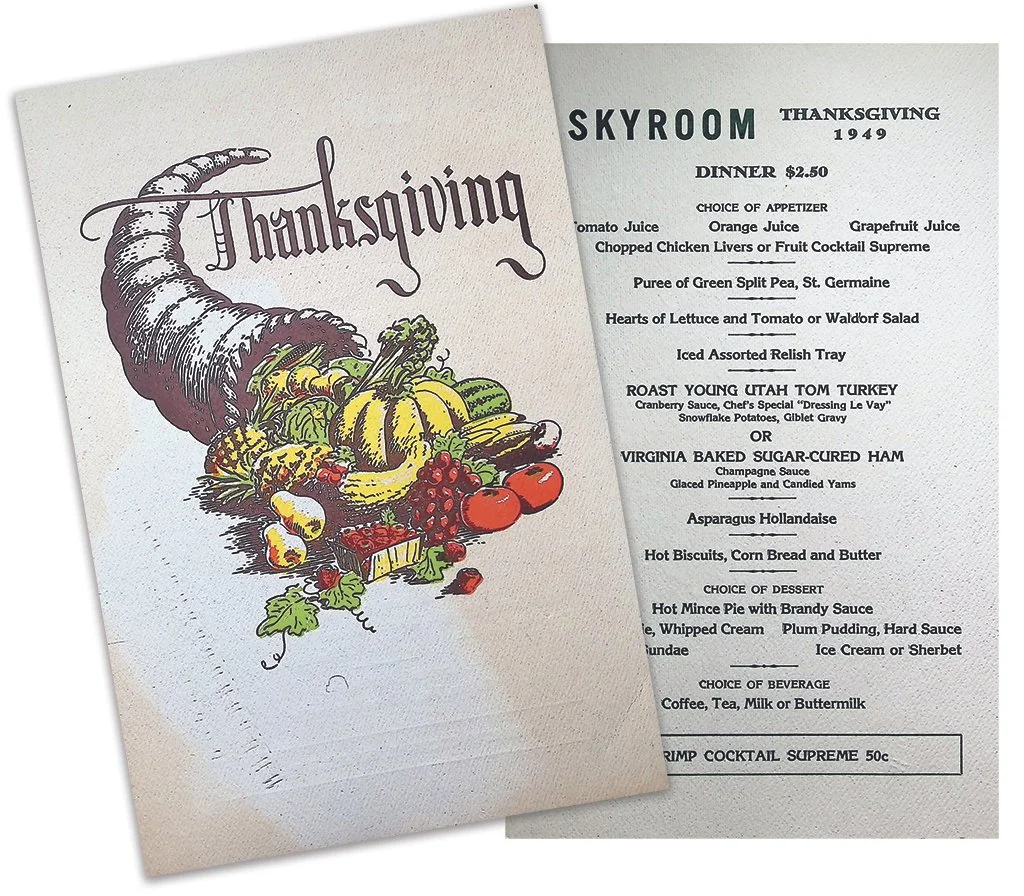
With the opening of the new Burbank airport terminal, we at the Burbank Historical Society had the rare opportunity to retrieve some of the original Sky Room menus from the old airport. Holding those surviving artifacts connects us directly to the diners, pilots, and Hollywood legends who once sat at those window tables, offering a tangible glimpse into what was on the plate during Burbank’s golden age of aviation.
The Sky Room Cafe represents a moment when flight was still romantic, unhurried, and deeply connected to the community around it. You didn't need a boarding pass to feel the thrill of travel; all you needed was a window table, a good meal, and a clear view of the runway.
