

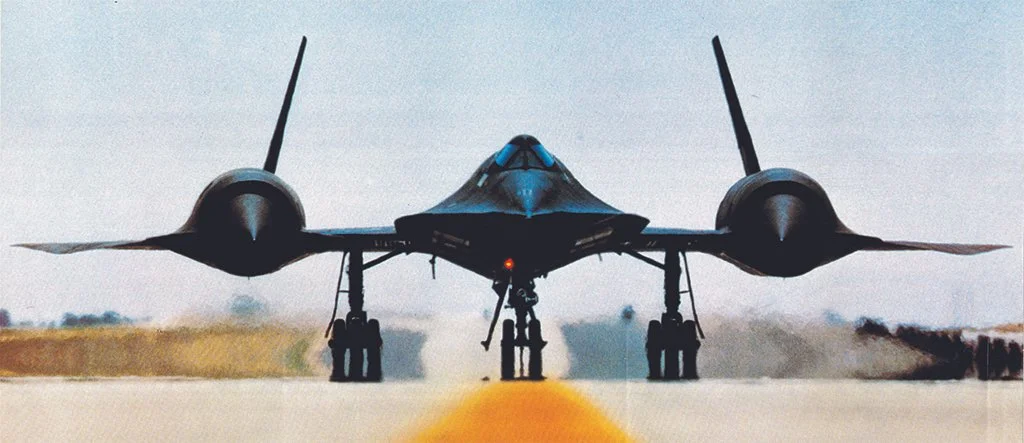
Built more than 60 years ago, the legendary SR-71 Blackbird remains one of the most extraordinary aircraft ever created—a machine so technologically advanced that even today's aviation industry continues to marvel at its achievements.
Imagine an aircraft designed in the early 1960s that could fly more than three times the speed of sound, soar above 85,000 feet, and outrun virtually any threat sent to intercept it. Now imagine that, more than six decades later, no publicly acknowledged operational crewed jet aircraft has surpassed its remarkable combination of speed and altitude.
That aircraft is the Lockheed SR-71 Blackbird, one of the greatest engineering accomplishments in aviation history.
Developed during the Cold War, the SR-71 was so far ahead of its time that many of its technological achievements remain impressive even by modern standards. Its futuristic appearance, revolutionary engineering, and extraordinary performance helped establish it as one of the most iconic aircraft ever built.
And remarkably, much of this incredible story began right here in Burbank, California.
Born in Burbank: Lockheed's Secret Skunk Works
The SR-71's story begins with Lockheed's legendary Skunk Works, the secretive aircraft development organization established in Burbank under the leadership of brilliant aerospace engineer Clarence "Kelly" Johnson.
During the late 1950s and early 1960s, the United States faced an enormous challenge. Soviet air defenses were becoming increasingly sophisticated, making traditional reconnaissance aircraft vulnerable to interception.
The solution was revolutionary: develop an aircraft capable of flying so high and so fast that enemy defenses would struggle to reach it.
Building upon the earlier A-12 reconnaissance aircraft, Johnson and his team developed what would become the SR-71 Blackbird.
Much of the aircraft's design and development took place at Lockheed's Burbank facilities, while flight testing and operational development occurred at secret locations, including Groom Lake, Nevada.
The SR-71 made its first flight on December 22, 1964, and entered operational service in 1966.
What makes this achievement particularly astonishing is that the aircraft was designed without the sophisticated computer modeling, digital engineering systems, and advanced manufacturing technologies available to aerospace engineers today.
Its designers relied heavily on slide rules, mathematical calculations, wind tunnel testing, and extraordinary engineering ingenuity.
The result was an aircraft that looked as though it belonged in the 21st century rather than the 1960s.
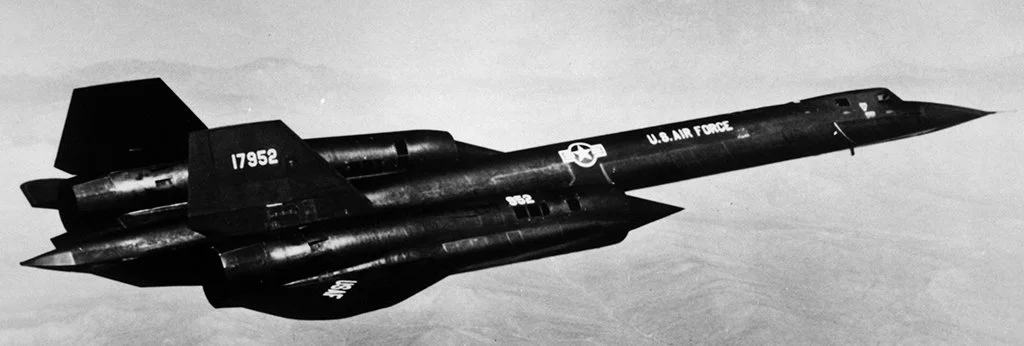
Faster Than a Bullet: The Incredible Speed of the Blackbird
The SR-71 was designed to operate at speeds exceeding Mach 3—more than three times the speed of sound.
At those speeds, the aircraft could cover enormous distances in astonishingly little time.
Its performance remains legendary:
Maximum operational speed: Above Mach 3.2, roughly 2,200 miles per hour, depending on altitude and conditions.
Operational altitude: Approximately 80,000 to 85,000 feet, with flights exceeding that range.
Record-setting performance: In 1976, an SR-71 established an absolute speed record for a crewed air-breathing jet aircraft of 2,193.167 miles per hour.
Extraordinary range: The Blackbird could travel thousands of miles, supported by aerial refueling.
To put its speed into perspective, most modern commercial passenger aircraft cruise at approximately 550 to 600 miles per hour.
The SR-71 could travel nearly four times faster.
Even today, the Blackbird's officially recognized speed record stands as one of aviation's most remarkable achievements.
Engineering That Defied the Limits of Its Time
Flying at Mach 3 presented challenges that conventional aircraft designers had never encountered.
At such extraordinary speeds, friction and compression of the air generated tremendous heat across the aircraft's exterior. Surface temperatures could exceed 500 degrees Fahrenheit in some areas.
Traditional aluminum aircraft construction simply could not withstand those conditions.
Lockheed's engineers developed extraordinary solutions.
An Aircraft Built Primarily from Titanium
Approximately 85 percent of the SR-71's structural weight consisted of titanium alloys.
Titanium offered exceptional strength and heat resistance while remaining relatively lightweight.
But working with titanium in the 1960s was extremely difficult. Specialized manufacturing processes, tools, and fabrication techniques had to be developed to produce the aircraft.
Even more remarkably, the United States reportedly obtained some of the titanium used in the Blackbird program through suppliers connected to the Soviet Union—the very country the aircraft was designed to monitor.
Engines Unlike Anything Else
The SR-71 used two Pratt & Whitney J58 engines, among the most extraordinary propulsion systems ever developed for an operational aircraft.
At lower speeds, the engines functioned much like conventional turbojets. But at Mach 3, their sophisticated inlet systems and airflow management allowed the propulsion system to operate with remarkable efficiency.
At high speeds, much of the aircraft's propulsive force came from the inlet and exhaust systems working together with the engines.
This innovative design allowed the Blackbird to sustain speeds that most military jets could achieve only briefly, if at all.
An Aircraft That Expanded in Flight
One of the SR-71's most fascinating engineering characteristics was its response to extreme heat.
As the aircraft accelerated to Mach 3, its metal structure expanded significantly.
Engineers designed the aircraft to accommodate this thermal expansion, including its fuel tanks and structural components.
On the ground, the aircraft could leak fuel because its tanks were not completely sealed under cold conditions. As the aircraft heated during flight, thermal expansion helped close those gaps.
It was an unconventional solution to an extraordinary engineering problem.
The Original Stealth Pioneer
Long before modern stealth fighters such as the F-22 Raptor and F-35 Lightning II, Lockheed engineers were already exploring ways to reduce an aircraft's radar signature.
The SR-71 incorporated several features intended to make it more difficult to detect and track, including its distinctive shape, carefully designed surfaces, and radar-absorbing materials.
Its long, sleek fuselage and unusual chines—the sharp extensions running along the forward fuselage—contributed to both aerodynamic performance and reduced radar visibility.
Although the Blackbird was not invisible to radar, its combination of reduced radar signature, extreme altitude, and tremendous speed made interception exceptionally difficult.
The aircraft's primary defense was simple: fly higher and faster than the threat.
Throughout its operational career, SR-71 aircraft encountered numerous surface-to-air missile threats.
Yet no SR-71 was ever confirmed shot down by enemy fire.
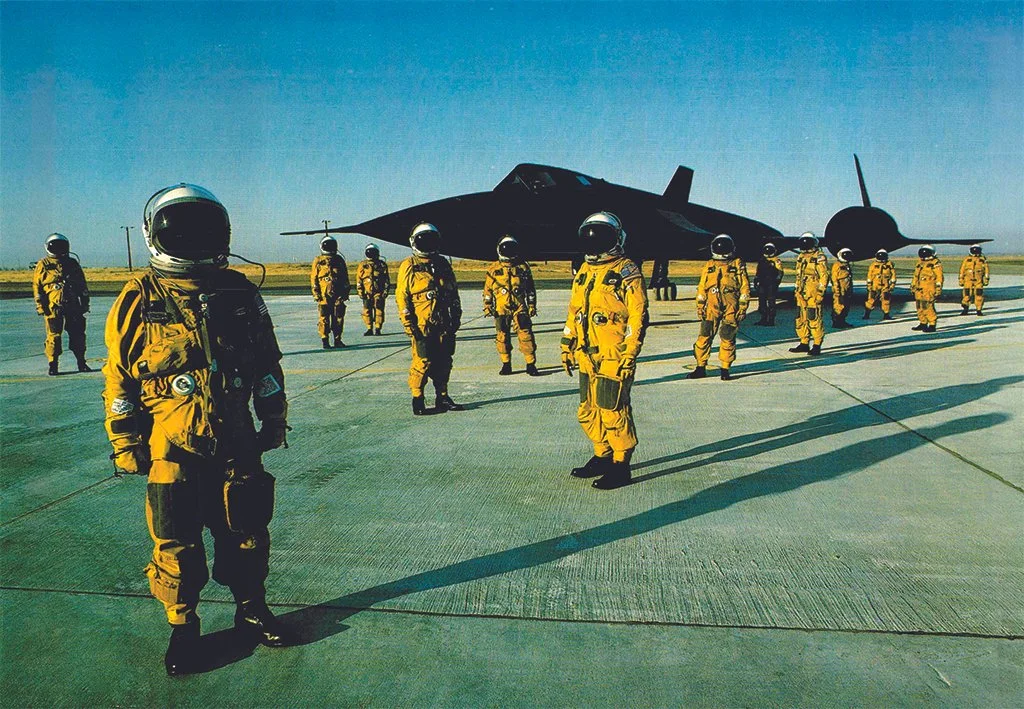
Flying at the Edge of Space
At altitudes above 80,000 feet, the SR-71 operated in an environment far beyond the reach of conventional passenger aircraft.
The sky above its crews appeared extremely dark, and the curvature of the Earth could be visible on the horizon.
Because of the extreme altitude, pilots and reconnaissance systems officers wore specialized full-pressure suits similar in appearance and function to those used by astronauts.
The aircraft's cockpit environment demanded extraordinary training and preparation.
Flying the Blackbird was not simply piloting an airplane. It was operating a highly sophisticated aerospace system near the limits of atmospheric flight.
Why Is the SR-71 Still So Impressive Today?
Perhaps the most remarkable aspect of the SR-71 is not what it accomplished during the Cold War, but how extraordinary those accomplishments remain today.
Modern aviation has made tremendous advances in computer technology, radar systems, stealth design, materials science, and autonomous flight.
Today's military aircraft possess capabilities that would have seemed unimaginable to engineers in the 1960s.
Yet few aircraft have ever matched the Blackbird's extraordinary sustained speed and operating altitude.
Why?
Because the SR-71 was designed for a very specific mission: high-speed, high-altitude strategic reconnaissance.
Modern military aircraft prioritize different capabilities, including stealth, maneuverability, sensor integration, survivability, and advanced weapons systems.
Satellites and unmanned aircraft have also transformed intelligence gathering, reducing the need for a specialized Mach 3 reconnaissance aircraft.
The Blackbird is therefore not necessarily more advanced than modern aircraft in every respect.
Rather, it represents an extraordinary achievement in a specialized area of aerospace engineering—one that remains difficult and expensive to duplicate.
The SR-71 was not simply ahead of its time. It was designed to operate at the extreme limits of what aviation technology could achieve.
A Legacy That Continues to Inspire
The SR-71's operational career eventually came to an end, with the U.S. Air Force retiring the aircraft in 1998. NASA continued using SR-71 aircraft for research until 1999.
But the Blackbird's influence did not end with its retirement.
Its innovations in titanium construction, thermal management, high-speed aerodynamics, propulsion, and radar-signature reduction helped advance aerospace engineering.
Today, the SR-71 continues to inspire aircraft designers, engineers, aviation enthusiasts, and future generations of scientists.
Its unmistakable black silhouette remains a symbol of American technological ambition and innovation.
And while newer aircraft may possess more sophisticated computers, sensors, and stealth capabilities, the Blackbird's extraordinary speed and altitude performance remain a benchmark in aviation history.
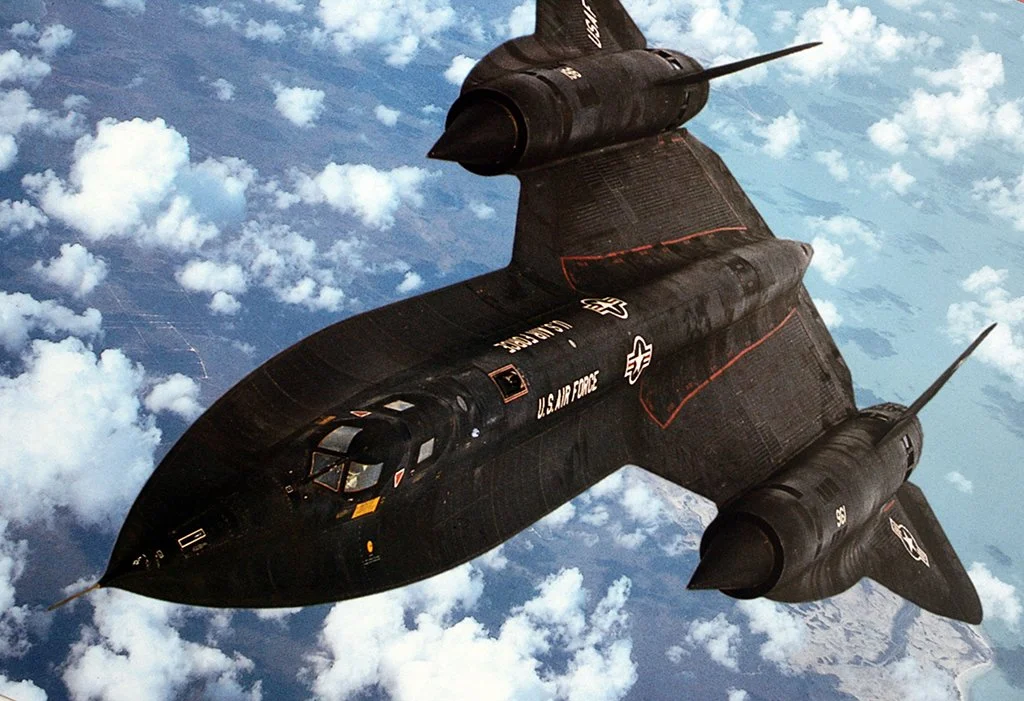
Burbank's Place in Aviation History
For the people of Burbank, California, the SR-71 represents something especially meaningful.
The city was once home to one of the most important aerospace manufacturing and engineering centers in the world.
Lockheed's Burbank operations helped produce legendary aircraft, including the P-38 Lightning, P-80 Shooting Star, U-2 reconnaissance aircraft, and the extraordinary Blackbird family.
Thousands of engineers, technicians, machinists, and skilled workers contributed to an aerospace legacy that changed aviation history.
The SR-71 stands among the greatest achievements associated with that legacy.
More than 60 years after its first flight, the Blackbird reminds us that some of history's most remarkable technological breakthroughs were accomplished by people working with tools and resources that seem remarkably limited by today's standards.
Their achievements demonstrate what imagination, determination, and engineering excellence can accomplish.
Sixty Years Later, the Blackbird Still Amazes
When the SR-71 first took to the skies in December 1964, the world was still years away from the first human landing on the Moon.
Personal computers, GPS navigation, smartphones, and today's advanced digital technologies did not exist.
Yet Lockheed's engineers created an aircraft capable of cruising above 80,000 feet at more than three times the speed of sound.
It was a machine so extraordinary that its performance continues to inspire awe more than six decades later.
The Lockheed SR-71 Blackbird is more than an aircraft. It is a testament to a generation of engineers who refused to accept the limits of what was considered possible.
And for Burbank, it remains a powerful reminder that some of the world's greatest aviation innovations have roots right here in our own backyard.
Discover more about Burbank's extraordinary aviation history and the people who helped shape it at the Burbank Historical Society's Burbank Museum.
The photographs contained in this website may not be reproduced without the express consent of the Burbank Historical Society.
