


Photo of Amelia Earhart in front of her Lockheed Model 10E Special Electra
When we think of Amelia Earhart, our minds usually drift to her dramatic disappearance over the vast, empty Pacific. But the grand, tragic final act of her life didn't begin on a tropical runway. It began in the bustling, sun-drenched hangars of Burbank, California.
To understand her historic final flight, you have to look at the place where her dream was physically built, and follow that thread all the way to the isolated radio frequencies of July 2, 1937.
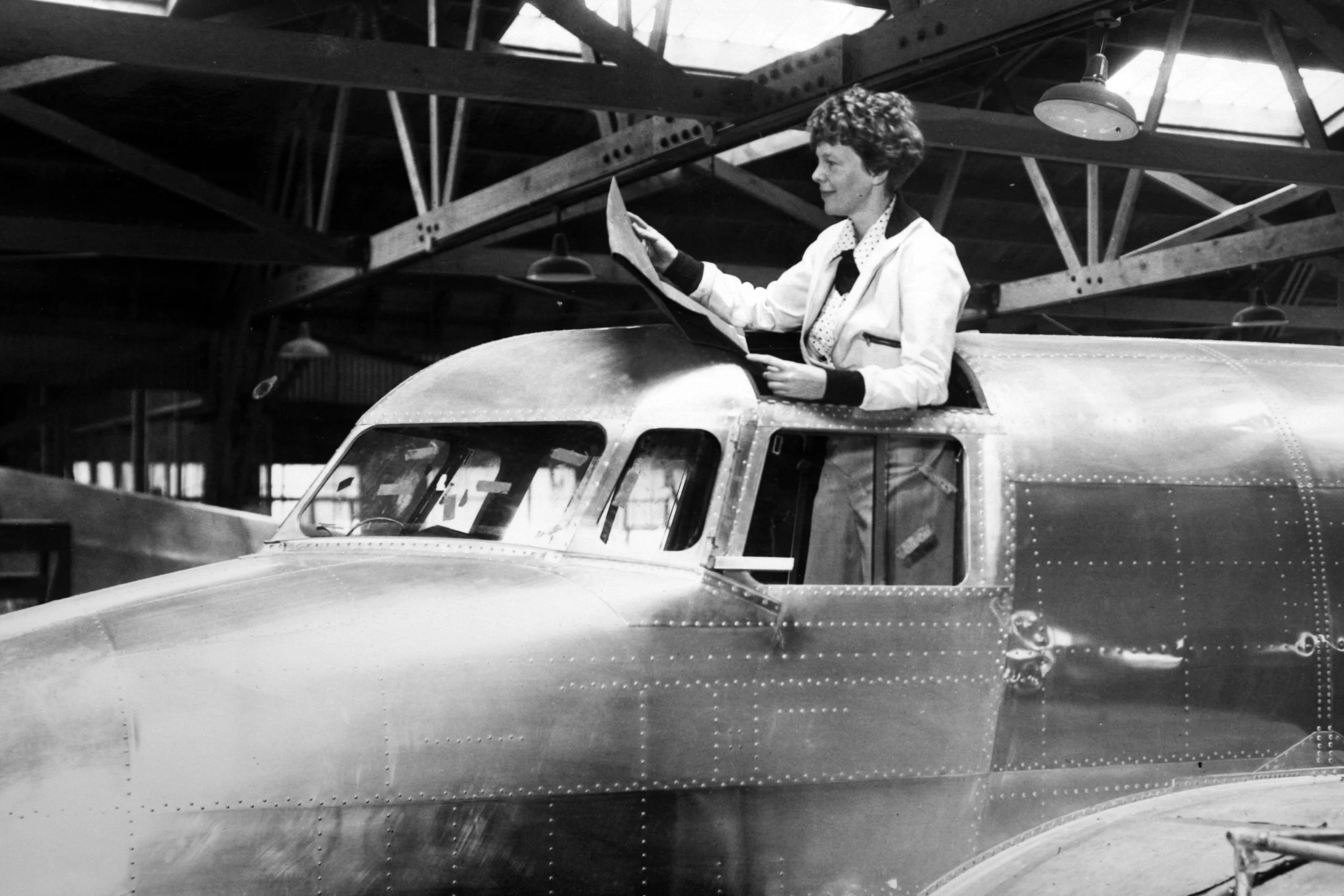
Lockheed Electra Model 10-E Emilia Earhart 1937
The Burbank Blueprint: Building the "Flying Laboratory"
By 1936, Amelia Earhart was already a global icon. She had flown the Atlantic solo and broken countless speed records. But she wanted one final, definitive crown: to circumnavigate the globe as close to the equator as possible—a grueling 29,000-mile journey that no pilot, male or female, had ever achieved.
To do it, she needed an extraordinary machine. Enter Burbank.
At the Lockheed Aircraft Company Factory in Burbank, engineers custom-built a Lockheed Electra 10E for her. Funded largely by Purdue University, this twin-engine, all-metal monoplane was dubbed her "Flying Laboratory."
The technicians in Burbank stripped out the standard passenger seats and stuffed the fuselage with massive auxiliary fuel tanks, expanding its capacity to 1,200 gallons. This modification gave her a staggering 4,000-mile flying range. For months, Earhart frequented the Union Air Terminal in Burbank (now the Hollywood Burbank Airport), testing the limits of the silver bird that she hoped would carry her into history.
The Equator Call: A 29,000-Mile Journey
After a failed first attempt heading west from California in March 1937—which ended in a severe runway crash in Hawaii—Earhart and her brilliant navigator, Fred Noonan, reversed direction.
On May 21, 1937, they quietly flew out of Burbank to Oakland, and then moved on to Miami, Florida, to officially begin their eastbound journey around the globe.
For over a month, the Electra performed beautifully. They hopped across the continents:
Miami to South America
Across the Atlantic to Africa
Over the Middle East to India
Down through Southeast Asia to Australia
By June 29, they arrived in Lae, New Guinea. They had successfully covered 22,000 miles. Only 7,000 miles remained—all of it across the daunting, featureless blue expanse of the Pacific Ocean.

Letter from Clarence Johnson to Amelia Earhart 1937 about fuel consumption
July 2, 1937: The Final Horizon
The most dangerous leg of the entire trip was the 2,556-mile stretch from Lae to Howland Island, a microscopic speck of land in the middle of the Pacific, measuring just 1.5 miles long and half a mile wide.
Because finding the island required absolute mathematical precision, celestial navigation, and radio coordination, the U.S. Coast Guard cutter Itasca was stationed at Howland to act as a radio beacon.
The Timeline of the Final Flight (Greenwich Mean Time)
Takeoff from Lae
July 2, 00:00 GMT
The Electra lifts off from a muddy runway in Lae, heavily laden with fuel. Witnesses note that the plane barely clears the water at the end of the strip.
First Major Radio Check-in
July 2, 07:18 GMT
Amelia reports a position 20 miles southwest of the Nukumanu Islands. She sounds calm, estimating a cruise speed of 111 knots.
The Silence Thickens
July 2, 14:15 GMT
Earhart gives another brief radio update. Crucially, weather conditions are deteriorating ahead, bringing unexpected cloud cover and rain squalls that hide the stars Fred Noonan needs for navigation.
Frantic Contact Attempts
July 2, 17:44 GMT
The Itasca picks up a strong radio voice from Amelia: "Cloudy and overcast." However, she cannot hear the Itasca's voice replies or radio homing signals. Her antenna may have been damaged upon takeoff.
The Last Words
July 2, 20:13 GMT
A frantic, static-heavy transmission cuts through the airwaves:
"We must be on you, but cannot see you—but gas is running low. Have been unable to reach you by radio. We are flying at 1,000 feet."
A final brief signal at 21:30 GMT gives a line of position (157-337), indicating they were flying north-and-south looking for the island. Then, the radio went dead.
A Legacy Born in the Skies
Amelia Earhart and Fred Noonan never made it to Howland Island. Despite the largest maritime search operation in U.S. history up to that point, no definitive trace of the silver Burbank-built Electra was ever found.
While the mystery of her final day continues to captivate researchers and history buffs alike, her journey shouldn't just be remembered for how it ended. It stands as a monument to human daring—a story that moved from a blueprint in a California hangar to the very edge of the earth.
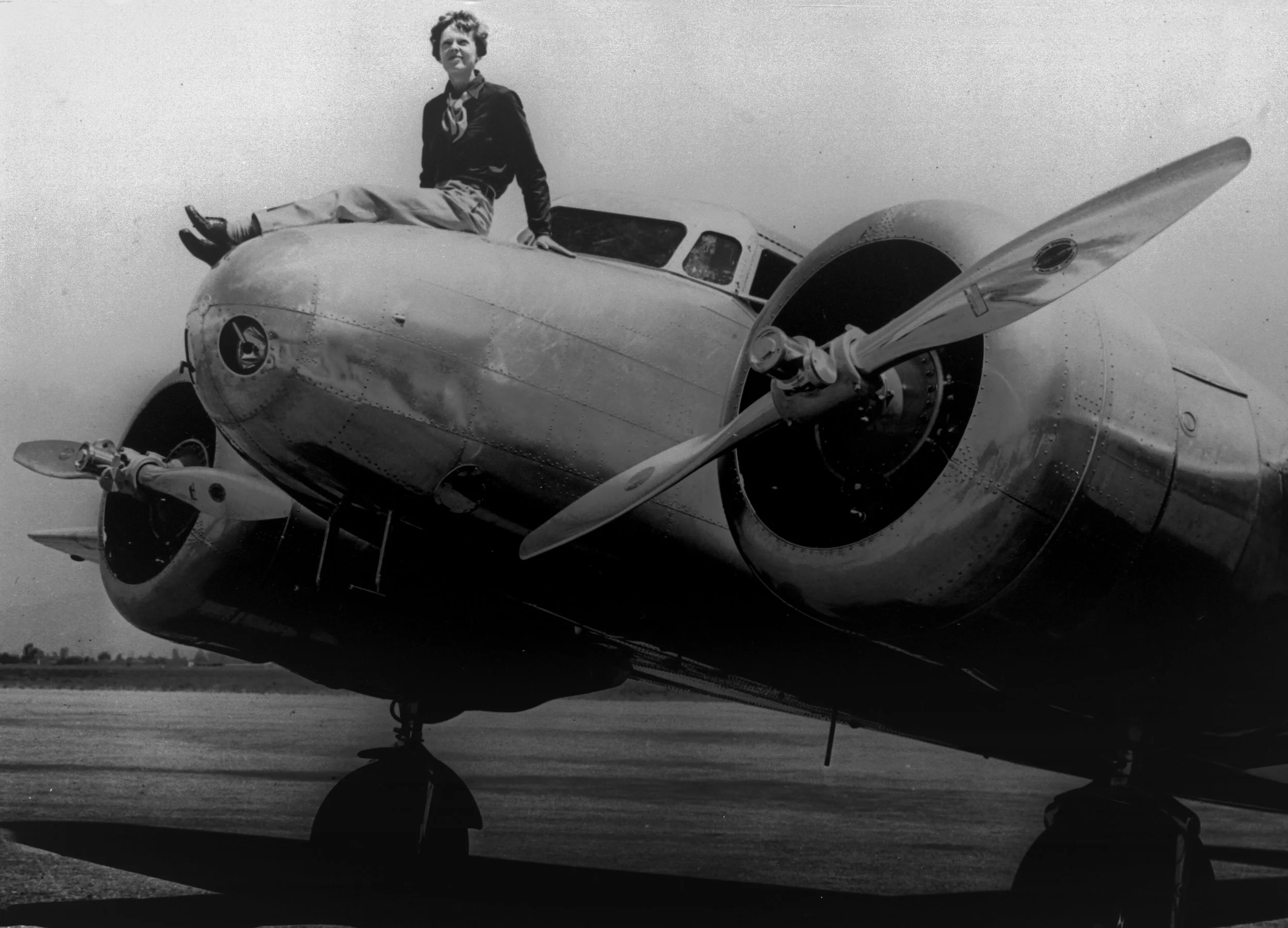
Amelia Earhart Model 10 Electra
