
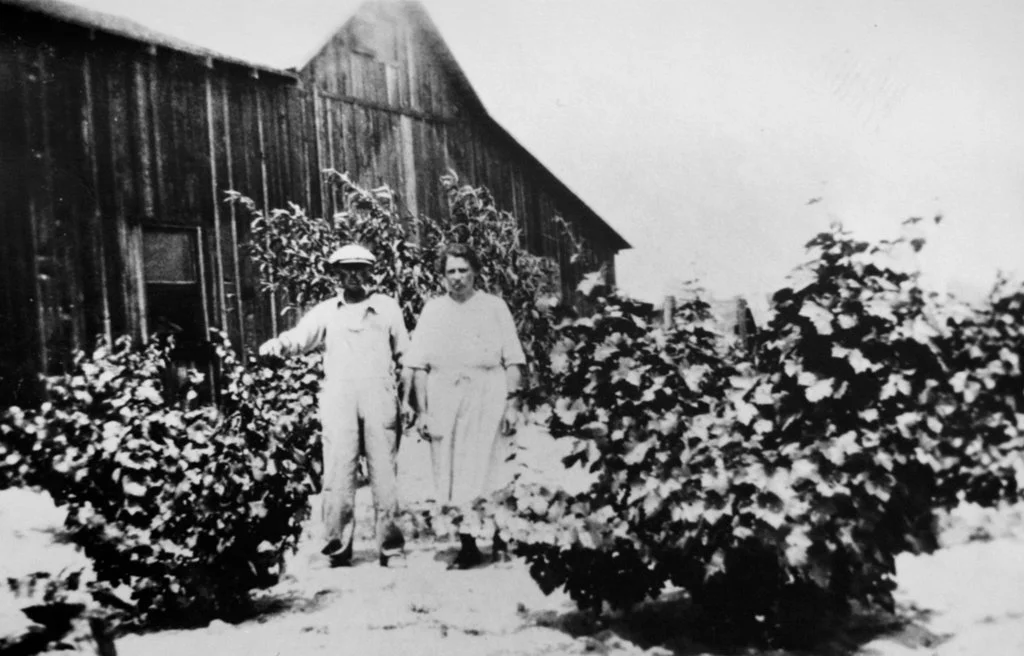
Brusso Winery 1926 Ontario and Thornton
It surprises many wine enthusiasts to learn that Southern California—not Napa or Sonoma—was the original cradle of California's commercial wine industry. Beginning in the Spanish Mission era and exploding during the 19th century, Los Angeles County was the state's dominant wine-producing region.
The sunny, arid climate of the San Fernando Valley, paired with fertile alluvial soil washing down from the Verdugo Mountains, created ideal conditions for growing grapes. Local farmers dotted the hillsides with grape arbors, shipping jugs and glass bottles across the state.
"In the 1860s and 1870s, the San Fernando Valley wasn't an urban sprawl—it was a patchwork of golden wheat fields, citrus orchards, and sprawling vineyards."
Local Legends: McClure Winery and Brusso Winery
While several operations like Gai and Grangetto helped build Burbank’s viticultural reputation, two local wineries stand out as bookends to the city’s wine era:
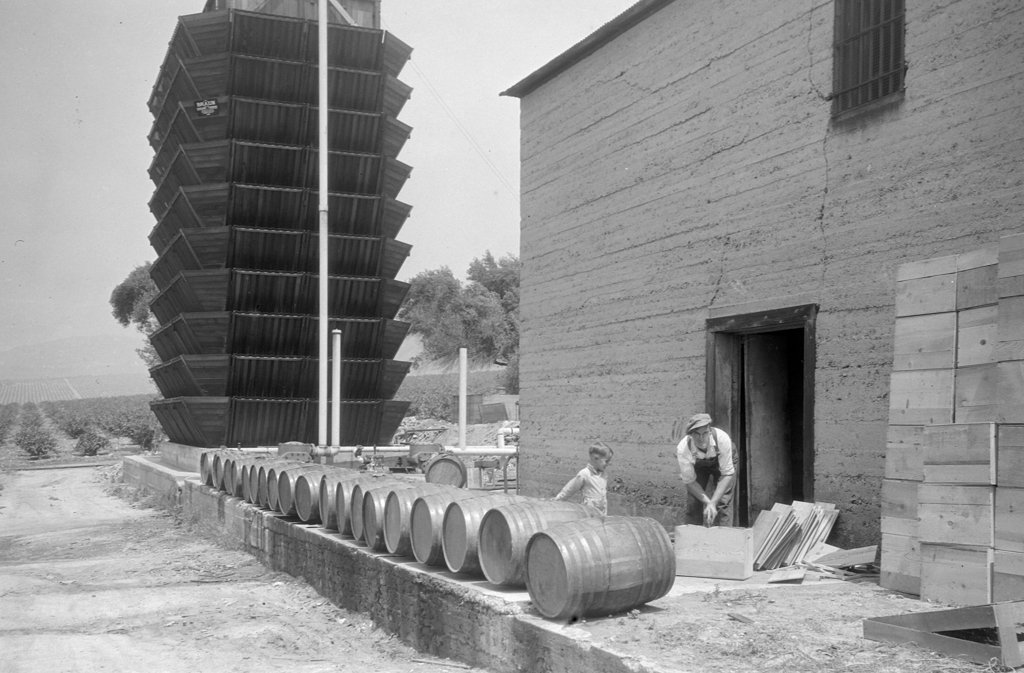
McClure Winery 1931
The McClure Winery (Sunnyside Winery)
Operating during the early-to-mid 20th century, the McClure Winery (also known historically as the Sunnyside Winery) was a notable staple of Burbank’s local wine production. Utilizing the grapes grown in the fertile valley soil, McClure helped keep Burbank’s commercial winemaking alive alongside regional agriculture into the 1930s and beyond.
Brusso Winery: The End of an Era
If McClure represents the golden age of Valley production, Brusso Winery marks its historic sunset. Located on Thornton Street near what is now the Hollywood Burbank Airport, Brusso Winery was famously the very last operating winery in Burbank.
Familial, traditional, and deeply rooted in the community, local photos from as late as 1957 show family members like Angela Brusso crushing grapes using classic methods. Remarkably, while Lockheed was building cutting-edge aircraft and movie studios were shooting blockbusters just a couple miles away, Brusso kept the ancient craft of winemaking alive right in town until closing its doors around 1967.
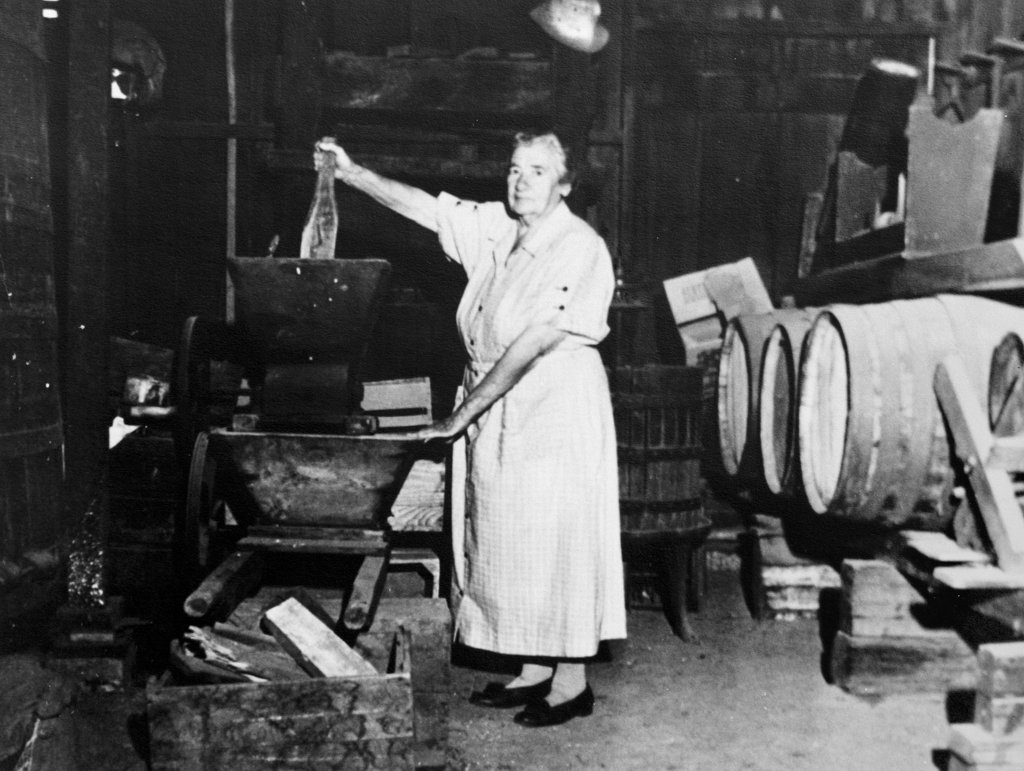
Brusso Winery Mrs Brusso crushing grapes 1957
Dr. David Burbank and the Grape Era
The city's namesake, Dr. David Burbank, a dentist and real estate speculator from New Hampshire, arrived in the area in the late 1860s. He purchased thousands of acres across Rancho Providencia and Rancho San Rafael.
Dr. Burbank Acquires the Land
1867
Dr. David Burbank purchases thousands of acres of former rancho land, establishing large-scale sheep ranching, wheat farming, and grape cultivation.
The Boom of the Providencia Land & Water Co.
1886
Dr. Burbank sells his holdings to land speculators who form the Providencia Land and Water Company, plotting out the townsite of Burbank while preserving surrounding agriculture.
Rise of Local Wineries
1890s–1930s
Operations like McClure Winery (Sunnyside Winery) flourish in the Valley alongside citrus orchards, supplying regional wine before suburban expansion takes hold.
Brusso Winery Closes
1967
Brusso Winery, located near the Burbank Airport on Thornton Street, closes its doors—officially ending Burbank's era as a wine-producing town.
Why Did the Vines Disappear?
If Burbank was such a prime spot for viticulture, why aren't we visiting Burbank wineries today? A few major forces reshaped the Valley floor:
Pierce's Disease: In the late 1880s, a devastating bacterial disease spread by insects wiped out tens of thousands of acres of vineyards across Southern California, forcing many farmers to pivot to other crops.
The Citrus and Truck Farming Boom: Grapes were replaced by citrus groves (oranges and lemons), peaches, and winter vegetables, which thrived with new irrigation technology.
The Land Boom & Industrialization: By the late 1920s through the 1950s, aviation manufacturing (like Lockheed) and motion picture studios found the wide, flat acreage of Burbank irresistible. Real estate quickly became far more valuable than agricultural acreage.
Traces of the Past
While soundstages, airport runways, and retail centers now stand where grapevines once soaked up the sun, Burbank's agricultural roots remain embedded in its history. Every now and then, collector wine bottles from old Burbank producers like Gai or Brusso surface at local flea markets or on eBay—a tangible reminder of the days when the Media Capital of the World was better known for what was aging in its cellars.
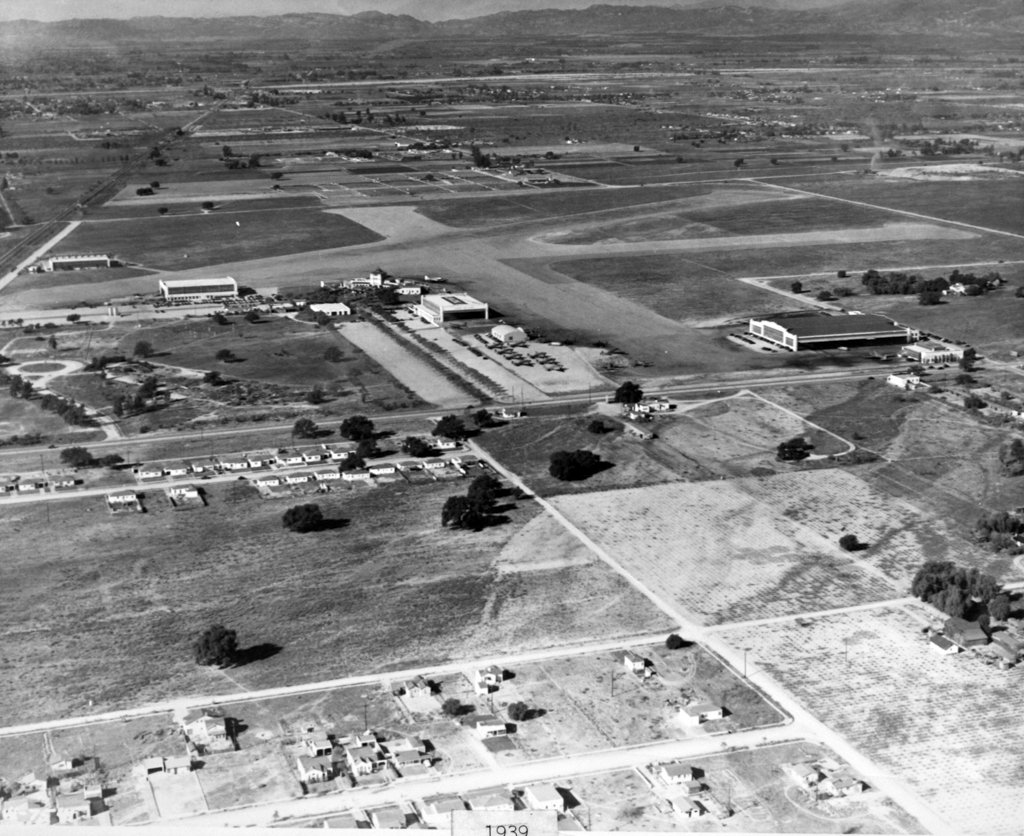
Air view (Burbank) airport & Brusso Winery 1939
