

The Dawn of the Jet Age: Why the Lockheed P-80 Shooting Star Changed Aviation Forever
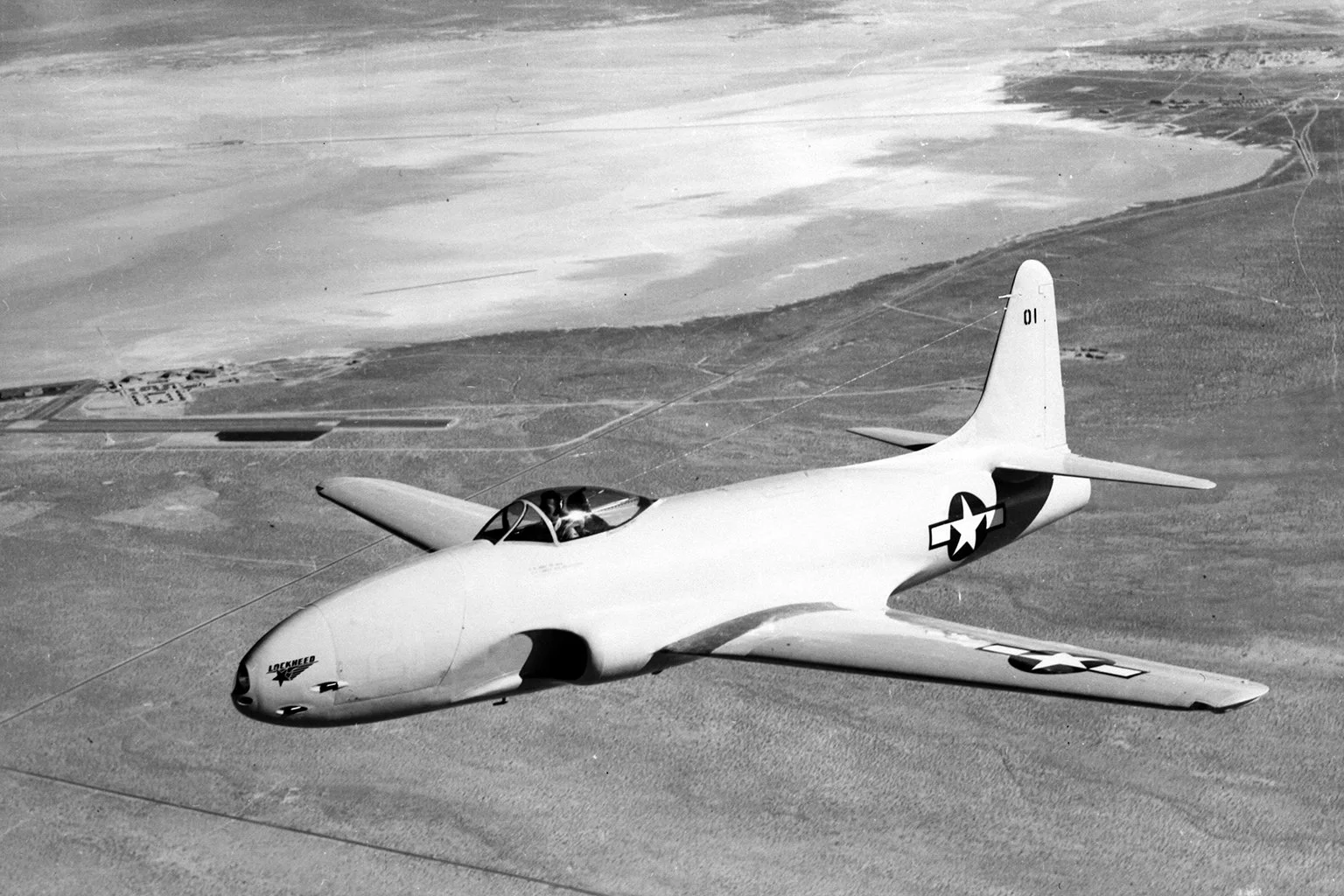
Lockheed XP-80 1944
When aviation enthusiasts discuss early jet fighters, Germany’s Messerschmitt Me 262 or Britain’s Gloster Meteor often steal the spotlight. However, it was the Lockheed P-80 Shooting Star (later redesignated the F-80) that laid the operational foundation for modern air forces, established high-speed jet tactics, and launched a legendary lineage of aerospace innovation.
Born in Secret: The 143-Day Miracle
In mid-1943, intelligence reports warned Allied commanders of Germany’s advanced jet development. The U.S. Army Air Forces urgently needed an operational jet fighter to counter the threat.
Lockheed handed the assignment to legendary aeronautical engineer Clarence "Kelly" Johnson and his team. Operating out of a rented circus tent next to a smelly plastics factory in Burbank, California, this group formed the nucleus of what became known as the "Skunk Works."
The Challenge Issued
June 1943
Lockheed is tasked with designing a fighter around the British Halford H-1B (Goblin) turbojet engine.
First Prototype Delivered
January 1944
Delivered in just 143 days—five days ahead of schedule—the XP-80 "Lulu-Belle" takes shape.
First Flight
January 8, 1944
Test pilot Milo Burcham takes the XP-80 into the skies over Muroc Dry Lake, reaching speeds over 500 mph.
Operational Adoption & Redesignation
1945–1950
The P-80 enters full service, eventually being renamed the F-80 Shooting Star when the U.S. Air Force forms in 1947.
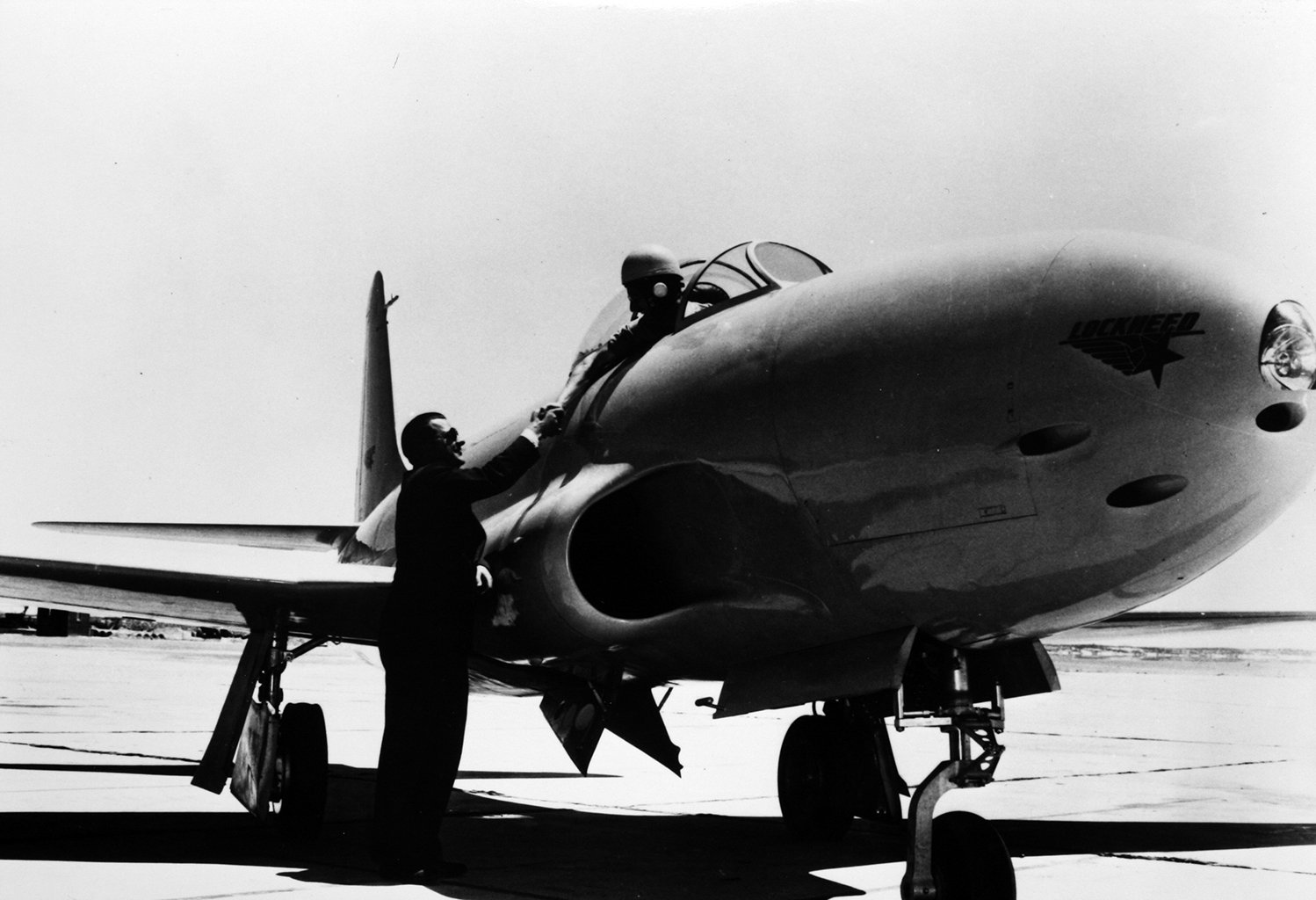
Kelly Johnson and the Lockheed P-80 Shooting Star
Key Breakthroughs: Why the P-80 Mattered
The P-80 wasn't just fast—it was a crucial leap forward in aircraft architecture and operational readiness.
Feature
Engineering Significance
Clean Airframe
Built with smooth, flush-riveted aluminum skin and thin laminar-flow wings to withstand high subsonic compressibility.
Nose-Mounted Armament
Six .50-caliber machine guns grouped tightly in the nose, eliminating propeller convergence issues.
Tip Tanks
Mounted wingtip fuel tanks extended operational range without sacrificing high-speed stability.
Mass Production
Unlike experimental jet aircraft, the P-80 was the first U.S. jet built in large numbers (>1,700 produced).
Trial by Fire: The Korean War
While it arrived too late to see combat in WWII, the F-80 became the backbone of Far East Air Forces during the Korean War (1950–1953).
On November 8, 1950, Lieutenant Russell J. Brown, flying an F-80C, engaged a Soviet-built MiG-15 over the Yalu River. Brown shot down the MiG, marking the first jet-versus-jet aerial victory in history.
Although straight-wing jet designs like the F-80 were soon outmatched in dogfights by swept-wing fighters like the F-86 Sabre and MiG-15, the Shooting Star adapted brilliantly into a rugged, low-level ground-attack aircraft.
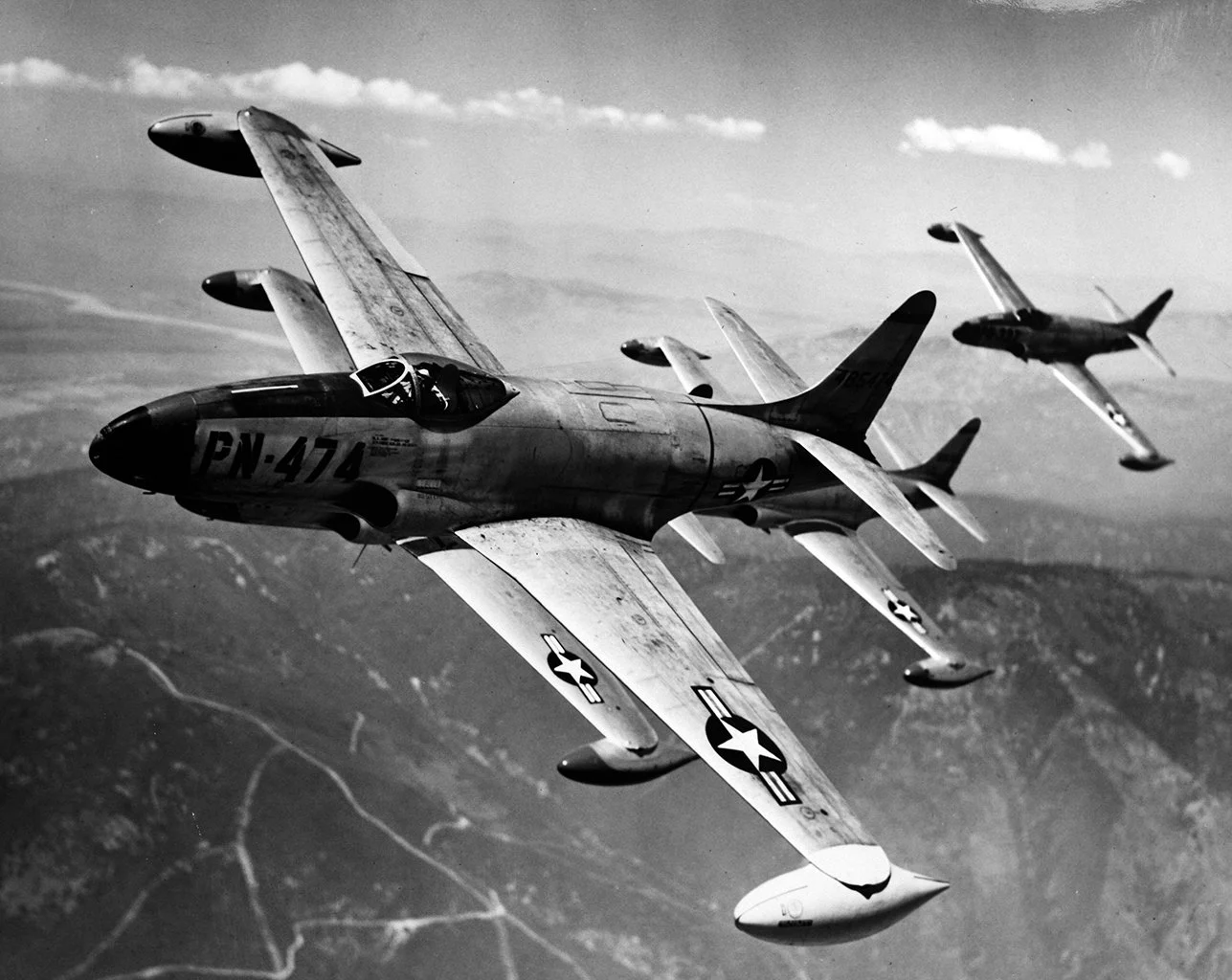
Lockheed P-80 Shooting Star Formation
The Ultimate Legacy: The T-33 Trainer
Perhaps the P-80’s most enduring gift to aviation history was its derivative, the T-33 Shooting Star (T-Bird). By inserting a second seat for an instructor, Lockheed created the primary jet trainer for the U.S. Air Force, Navy, and dozens of allied nations for over four decades.
Generations of fighter pilots learned high-speed instrument flight, jet engine management, and high-altitude navigation inside the cockpit of a T-33.
The Lockheed P-80 Shooting Star bridged the gap between propeller-driven warplanes and supersonic jet combat. It proved that jet power could be reliable, mass-produced, and operationally viable—all while cementing Lockheed's Skunk Works as the premier experimental aircraft division in the world.
