

Archiving Connections: Uncovering Coastal History in the San Fernando Valley

When archivist teams set out to catalogue historical physical collections, they expect to immerse themselves in local lore. But history rarely respects geographic boundaries.
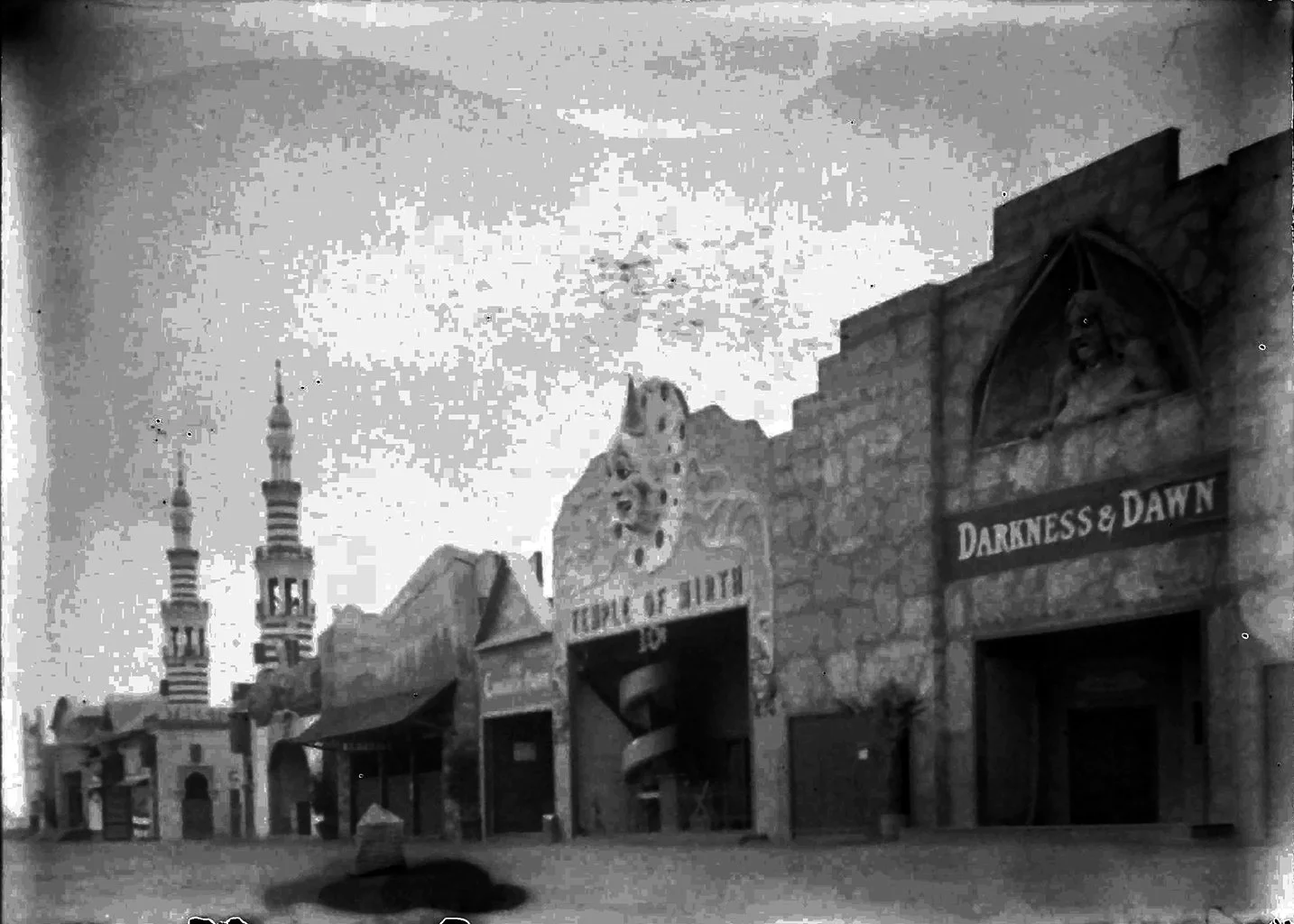
While carefully digitizing a newly donated batch of antique glass plate slides, volunteers at the Burbank Historical Society made an unexpected discovery. Nestled among turn-of-the-century portraits of Valley citrus orchards and early aviation pioneers were a series of misfiled, beautifully preserved images—not of Burbank, but of Southern California’s turn-of-the-century coastal crown jewels: Ocean Park and Venice of America.
The Fragile Magic of Glass Plate Slides
Before modern film rolls or digital sensors, late 19th- and early 20th-century photographers used silver gelatin glass plates. These delicate sheets of glass captured breathtaking detail, depth, and contrast, but they are notoriously fragile.
Glass plate archives often contain surprises. Families, traveling photographers, and early tourists frequently carried their equipment across Southern California via the Pacific Electric Railway. A photographer living in Burbank in 1910 might take the red car down to the coast for a weekend excursion, capture the bustling beachfront, and store the negatives alongside family photos for generations.
Lost Coastlines: What the Slides Revealed
The newly identified slides offer a crisp window into a transformative era along Santa Monica Bay.
1. Ocean Park, Santa Monica
Founded in the late 1890s by Abbott Kinney and Francis Kinney (and later expanded by Alexander Fraser), Ocean Park was one of Southern California's premier resort towns.
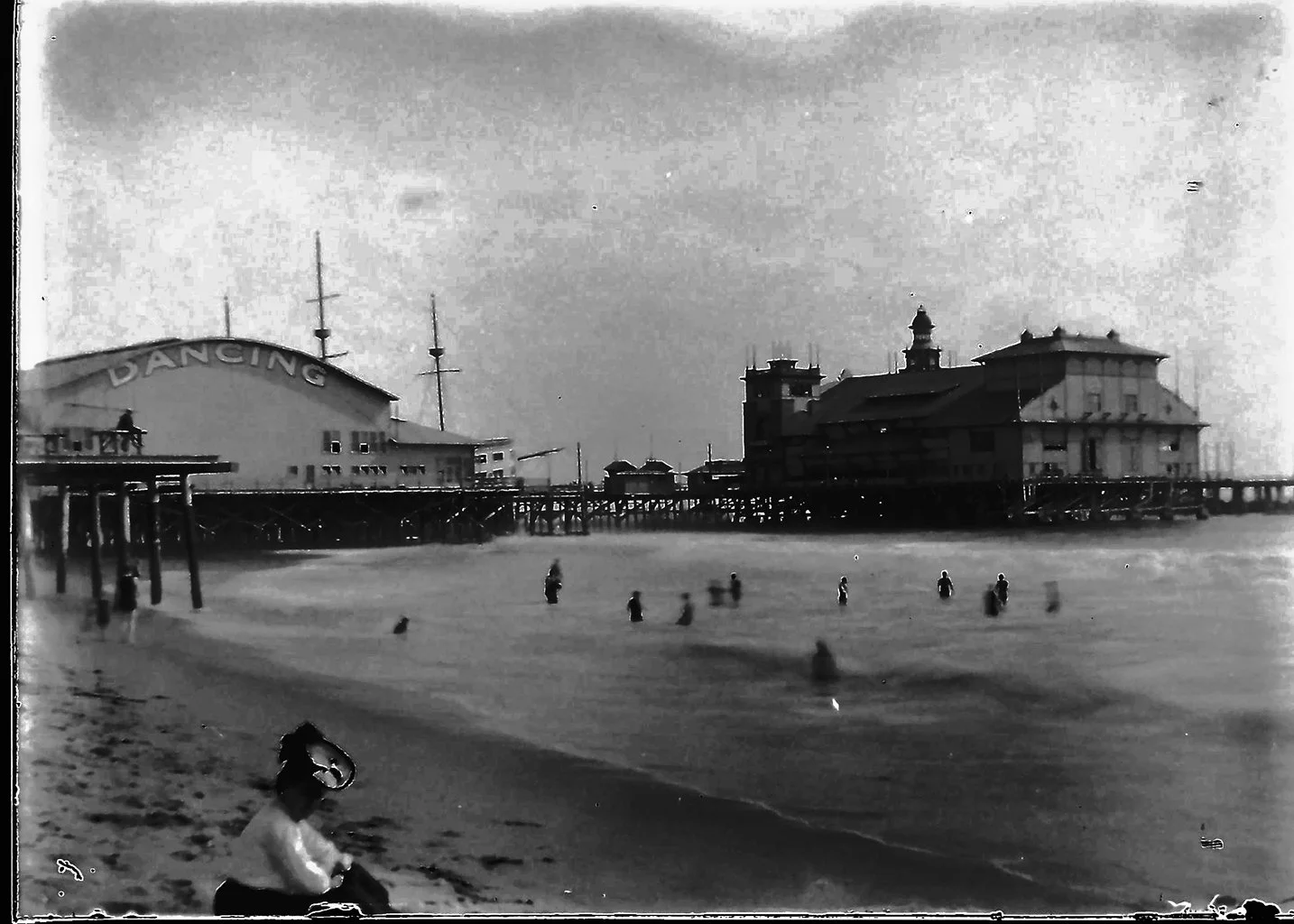
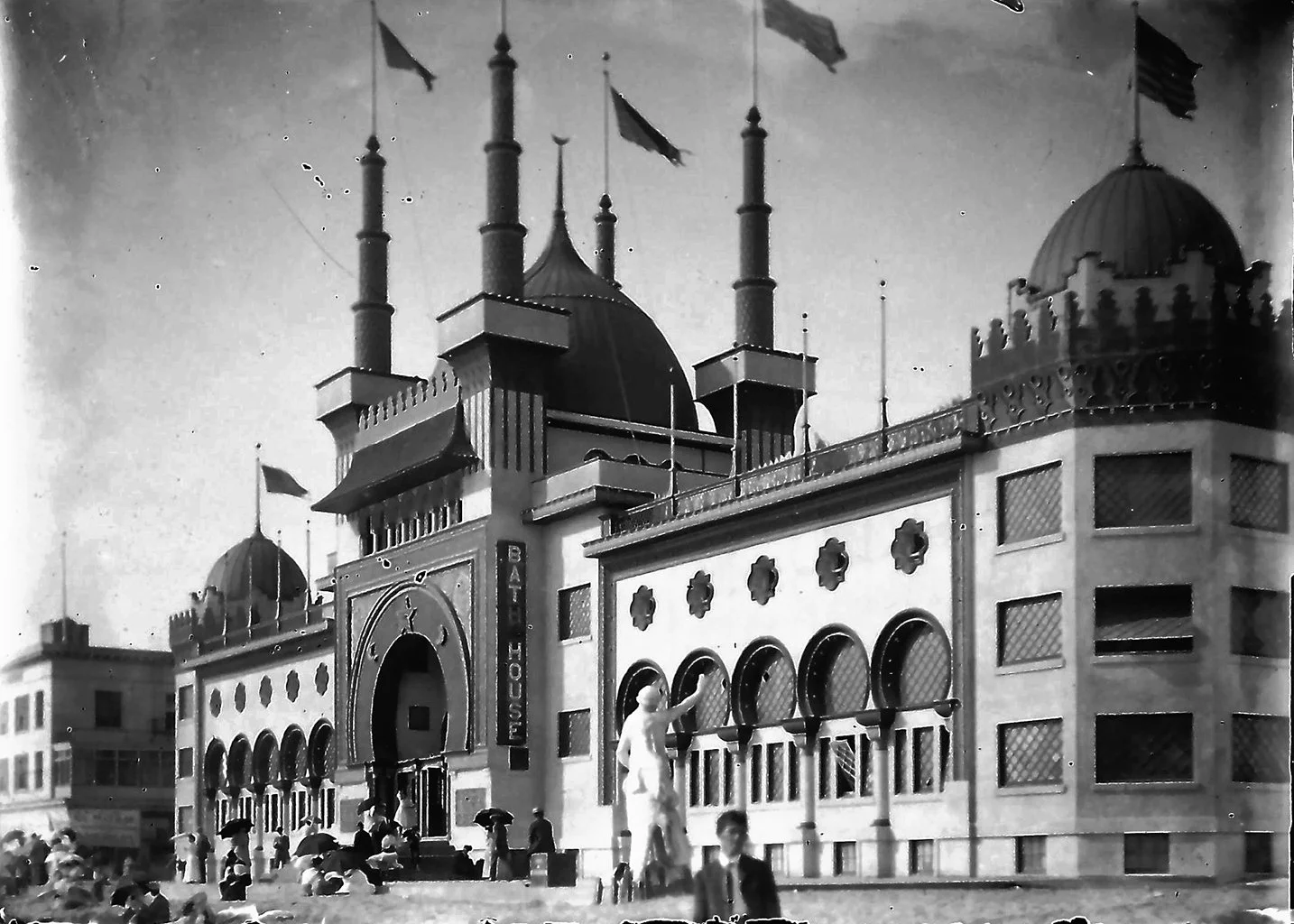
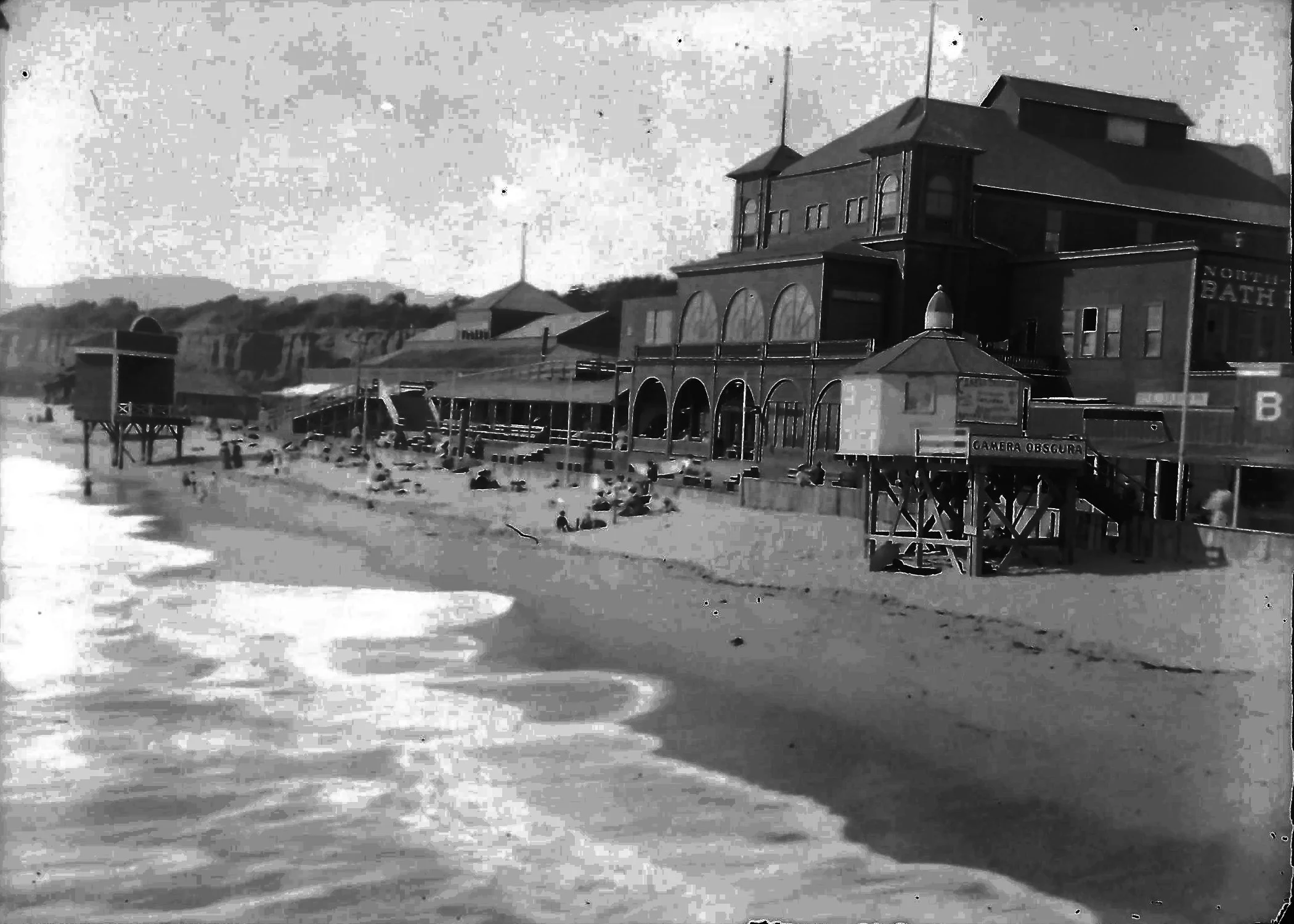
The Scene: The discovered slides show the grand wooden bathhouses, oceanfront boardwalks, and early pleasure piers jutting into the surf.
The Context: Ocean Park offered working-class and middle-class Angelenos an accessible weekend escape, lined with hot-salt-water plunges, roller coasters, and Victorian-style beach houses.
2. Venice of America
When Abbot Kinney broke away from Ocean Park to create his dream project—a romantic resort modeled after Venice, Italy—many thought he was mad to build on swampy marshlands. Opened on July 4, 1905, "Venice of America" became an instant sensation.
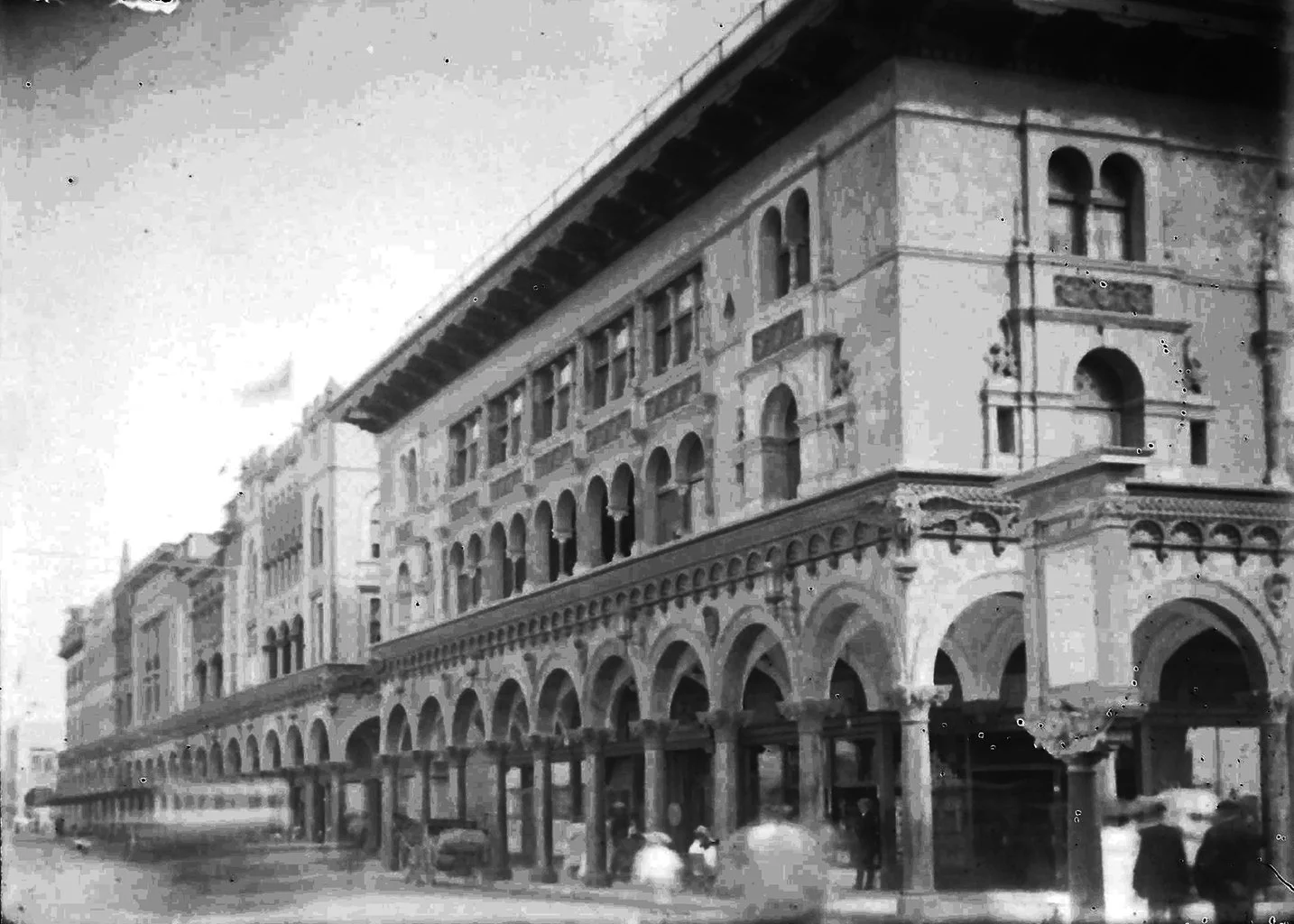
The Scene: The slides feature Kinney’s famous saltwater canals spanned by arched pedestrian bridges, decorative Italianate colonnades, and imported Venetian gondoliers navigating tourists through the waterways.
The Context: While many of the original canals were paved over in 1929 to accommodate the automobile, these glass negatives capture the resort during its heyday before fire and modern development altered its landscape.

Why Inter-Community Archival Collaboration Matters
Discoveries like these highlight the core mission of regional historical societies: history belongs to everyone.
Archival Stewardship in Action: When historical societies uncover materials outside their local geographic focus, digitizing and sharing those records creates a broader network of historical preservation.
By identifying, preserving, and sharing these glass plates with coastal archives like the Santa Monica Historical Society and Venice Heritage Museum, local historians bridge the physical distance between the San Fernando Valley and the Westside.
These "archiving connections" remind us that Southern California's history isn't stored in isolated silos—it is a shared tapestry connected by railways, early neighborhoods, and the curious eyes of photographers over a century ago.
