
When you think of Burbank, California, your mind probably jumps straight to Hollywood glamor. It’s the "Media Capital of the World," home to Warner Bros., Disney, and Nickelodeon. But long before the movie studios arrived, Burbank was staring down total economic ruin.
And it wasn't a sleek tech innovation or a glamorous movie star that saved the town from turning into a ghost city. It was a humble, rough-skinned, orange-fleshed fruit: the cantaloupe.
Here is the wild, forgotten story of how a melon craze rescued Burbank, became its literal saving grace, and earned a permanent spot on the original city seal.
The Great 1888 Bust: A Boom Town on the Brink
In the late 1880s, Southern California was experiencing a massive real estate bubble. A fierce railroad fare war between the Santa Fe and Southern Pacific railroads brought people streaming west. Land speculators jumped at the opportunity. In 1887, a group of investors bought up land from a sheep rancher named Dr. David Burbank, mapped out a townsite, and began aggressively selling lots.
For a second, it worked beautifully. People were buying property fast, and optimism was sky-high.
Then came April 1888. The real estate bubble burst with catastrophic force.
Across Los Angeles County, land values plummeted overnight. Newly plotted "boom towns" evaporated into thin air, leaving behind empty dirt roads and abandoned buildings. Burbank found itself on life support. The speculators fled, the businesses shuttered, and the remaining residents were left wondering how they were going to survive in a semi-arid valley with collapsing property values.
Enter the Muskmelon: Burbank's Green Gold
The remaining residents realized they couldn't rely on selling dirt anymore; they had to grow something in it. Luckily, Burbank sat in the San Fernando Valley, which possessed incredibly rich, fertile topsoil. The town had also just established its first reliable water system and agricultural irrigation lines in 1887.
Local farmers began experimenting with different crops—peaches, grapes, and alfalfa—but nothing took off quite like the North American cantaloupe (scientifically a type of muskmelon).
Why Cantaloupes?
The San Fernando Valley’s climate featured blazing hot summer days and cooler nights—absolute perfection for concentrating the sugars in melons.
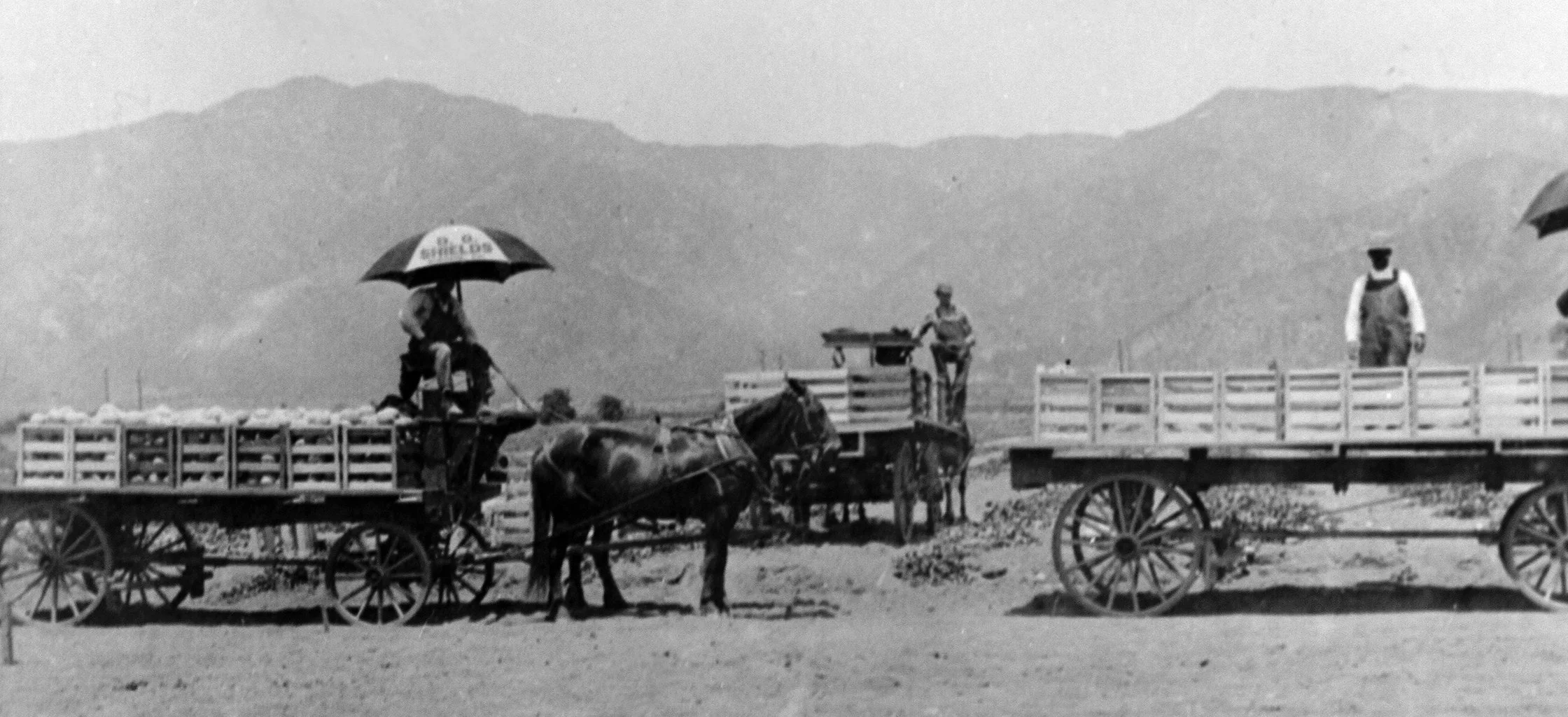
When the Southern Pacific Railroad opened the Burbank Branch railroad line in 1893, Burbank's farmers hit the jackpot. Suddenly, they had a direct, fast pipeline to transport fragile, perishable crops straight to the tables of hungry citizens in Los Angeles and beyond.
Burbank cantaloupes became a massive hit. They were sweet, juicy, and grew in such abundant numbers that the local packing houses were practically bursting at the seams every summer. The melon crop pumped crucial cash back into the local economy, keeping the schools open, the banks afloat, and the community intact during the leanest years of the late 19th and early 20th centuries.
Sealing the Deal: The Sweetest City Symbol
The cantaloupe didn’t just put money in farmers' pockets—it defined the city's identity.
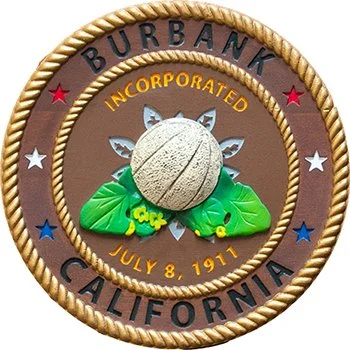
When Burbank finally recovered enough to officially incorporate as a city on July 8, 1911, the founders wanted to honor the humble crop that had kept them on the map. When they designed the very first official city seal, they placed a giant, proudly detailed cantaloupe right in the center.
It stood as a symbol of resilience, agricultural wealth, and the sweet reward of surviving a major economic crash.
From Melon Patches to Movie Lots
Eventually, Burbank's landscape shifted again. In the 1920s and 30s, aviation pioneers like Lockheed and entertainment giants like Walt Disney realized that Burbank’s wide-open, cheap farmland was the perfect place to build massive hangars and soundstages. The melon patches were paved over to make way for the silver screen.
By 1931, the city modernized its seal, swapping out the cantaloupe for symbols of aviation and industry.
But next time you’re driving down Olive Avenue or getting a bite to eat near the Warner Bros. lot, give a little nod to the humble cantaloupe. Without it, the "Media Capital of the World" might have just been another forgotten dot in the California dirt.
