
Before Disneyland: The Steampunk Monorail of 1910s Burbank
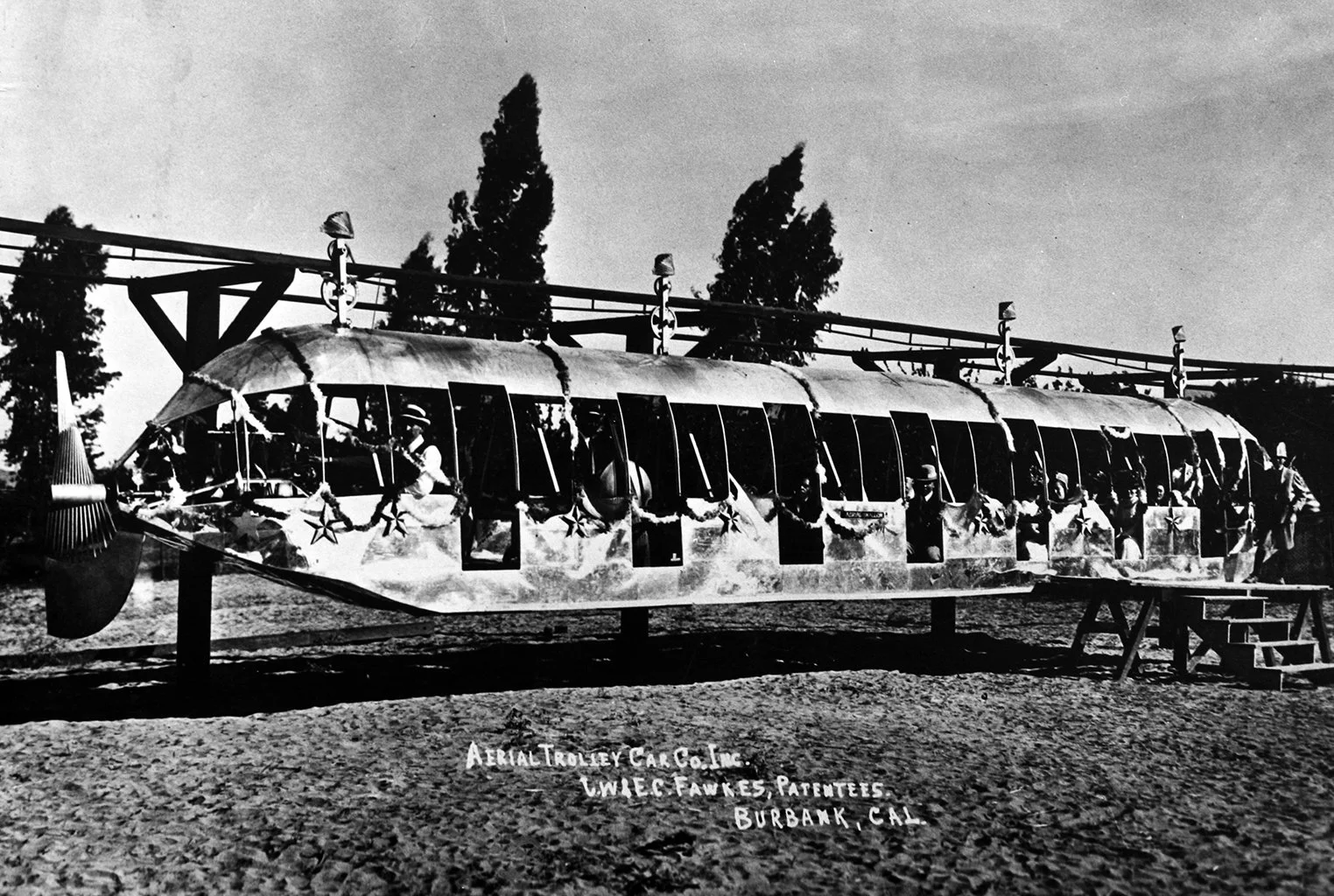
Fawkes Aerial Trolley Car
Long before Burbank became the media capital of the world, and decades before Walt Disney brought a sleek monorail system to Anaheim, a visionary eccentric named Joseph Wesley Fawkes had a wild dream. He wanted to connect the small, newly incorporated town of Burbank to downtown Los Angeles via a flying, propeller-driven aerial trolley.
This is the story of the "Aerial Swallow"—better known to cynical locals of the era as "Fawkes' Folly."
A Visionary in an Apricot Orchard
In the early 1910s, Burbank was a quiet agricultural hub with a population hovering around just 500 people. As the town grew, civic leaders debated how to solve a classic Southern California problem: public transit. Most boosters campaigned heavily to bring the famous Pacific Electric "Red Car" streetcars out to the valley.
But J.W. Fawkes, a wealthy local farmer and inventor, thought streetcars were stuck in the past.
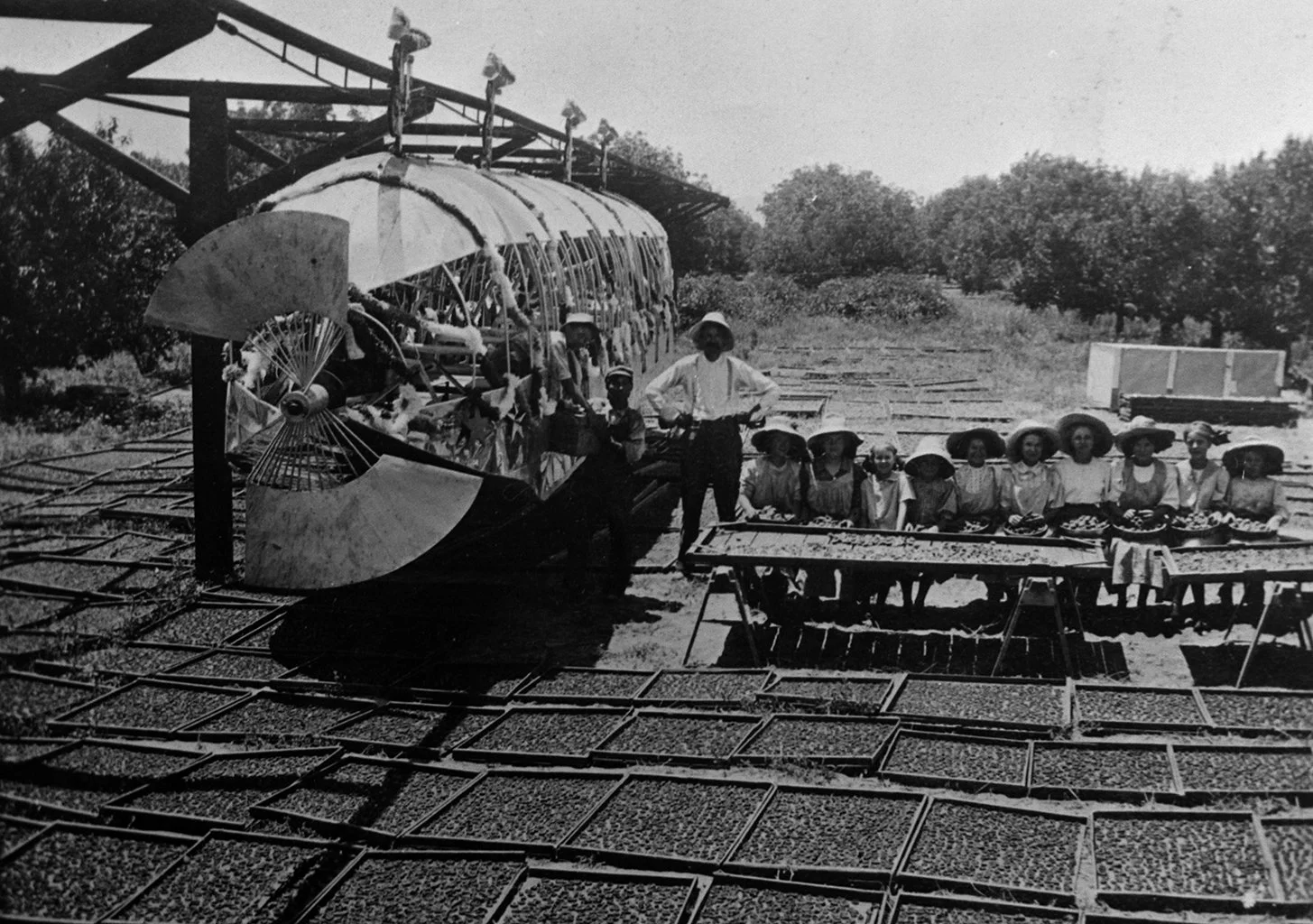
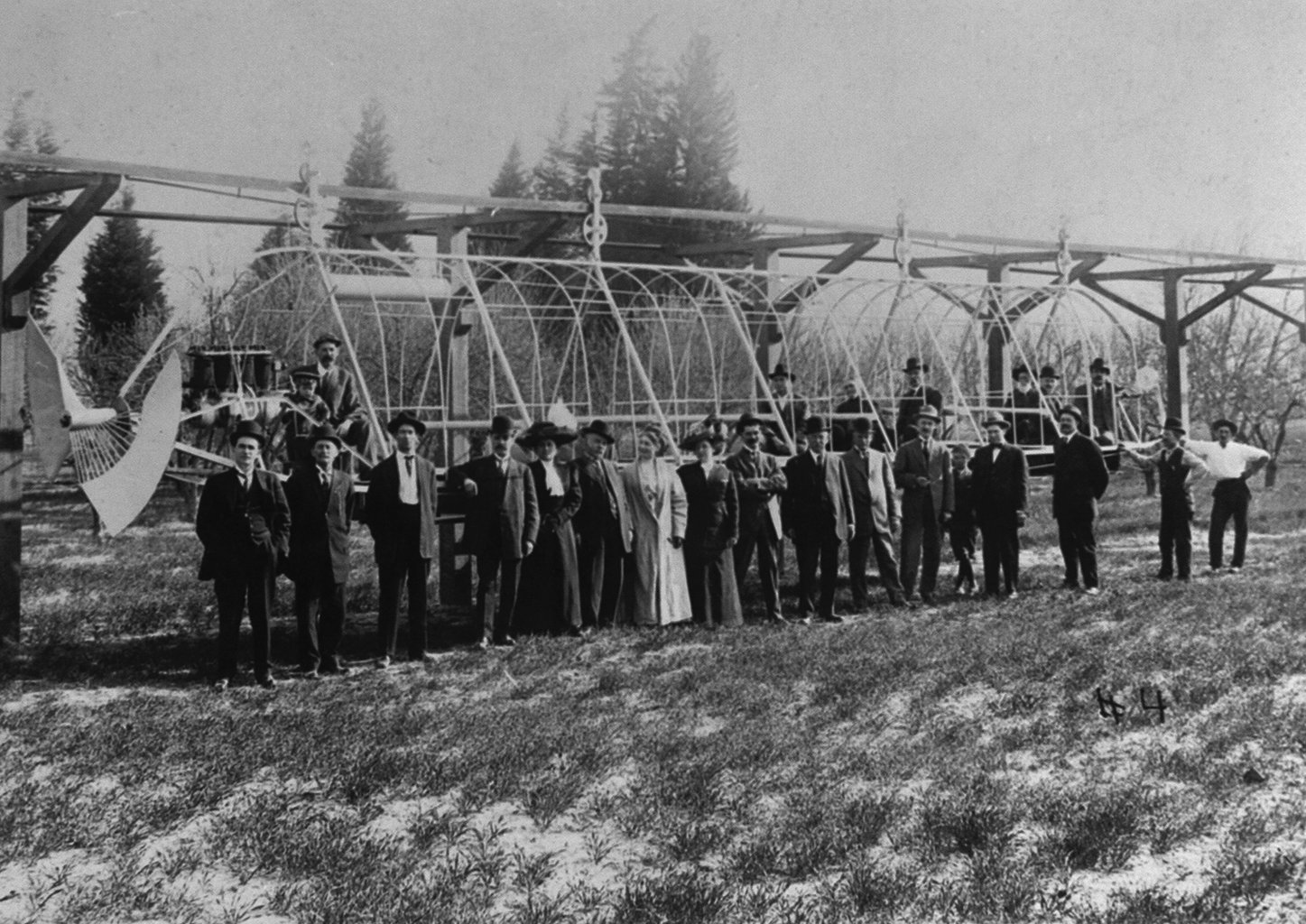
Fawkes envisioned something grander, faster, and distinctly more futuristic. Having patented a monorail design in 1907, he set out to convince the city that an overhead rail system was the true path forward. To prove his point, he didn't just draw blueprints—he built a functional, 840-foot-long experimental test track right through his own apricot and walnut orchard, running roughly between what is now Lake Street and Flower Street.
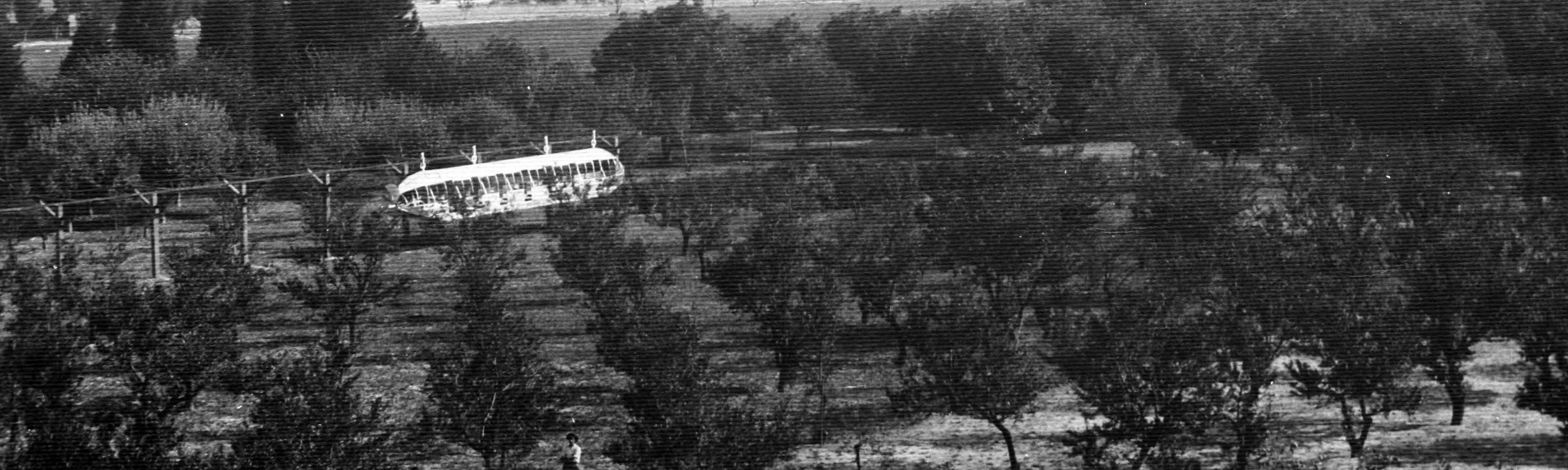
Fawkes Aerial Swallow
The "Aerial Swallow" Specs
Fawkes' invention looked like something straight out of a Jules Verne novel. It was a fascinating blend of early aviation engineering and rail transit.
The Vessel: A cigar-shaped, lightweight overhead trolley car spanning about 40 feet in length.
The Power Plant: It was powered by a Franklin air-cooled engine.
The Propulsion: Instead of sending power directly to the wheels to grip a track, the engine turned a large, wire-framed wooden propeller mounted at the end of the car, literally pulling the trolley through the air.
The Speed: Fawkes boldly claimed that his production models would whisk passengers from Burbank to downtown Los Angeles in just over 10 minutes, hitting speeds of up to 60 miles per hour.
On July 4, 1911, Fawkes officially unveiled the prototype to the public. He decorated the aerial tram with American flags, packed it with curious neighbors (and even an upright bass player to provide live music), and gave it its poetic name: The Aerial Swallow.
Why the Swallow Never Flew High
Despite the incredible spectacle of a propeller-driven tram gliding above the Burbank dirt, the project ultimately derailed before it could ever expand.
For one, the prototype was plagued by stability and performance issues. During a few test runs, the framework proved flimsy, and on one infamous occasion, the system suffered a partial collapse. The promised 60 mph speeds never quite materialized on the short track, and the sheer noise and wind generated by a giant open-air propeller didn't exactly scream "comfortable morning commute."
The Death Blow: The Burbank city council wasn't convinced. In late 1911, the city chose to invest $48,000 to extend the reliable Pacific Electric Red Car line instead.
Fawkes strongly opposed the streetcar funding, pitching alternative routes that would connect his monorail from Los Angeles all the way to Santa Monica. However, without government backing or heavy private investment, his dream collapsed.
The orchard track sat largely unused, quietly deteriorating until it was finally dismantled in the early 1920s.
The Legacy of Fawkes' Folly
Today, the site of the old orchard is completely paved over, surrounded by bustling industrial and commercial properties near Olive Avenue. If you mention an "aerial tram" or a "monorail" in Burbank today, people will assume you're talking about a studio backlot ride or a theme park trip down the freeway.
Yet, J.W. Fawkes deserves a nod in the history books. Long before the region was defined by crowded freeways, gridlock, and multi-billion-dollar subway initiatives, a lone inventor in a Burbank orchard looked up at the sky and tried to give Southern California the rapid mass transit it is still trying to build today.
