
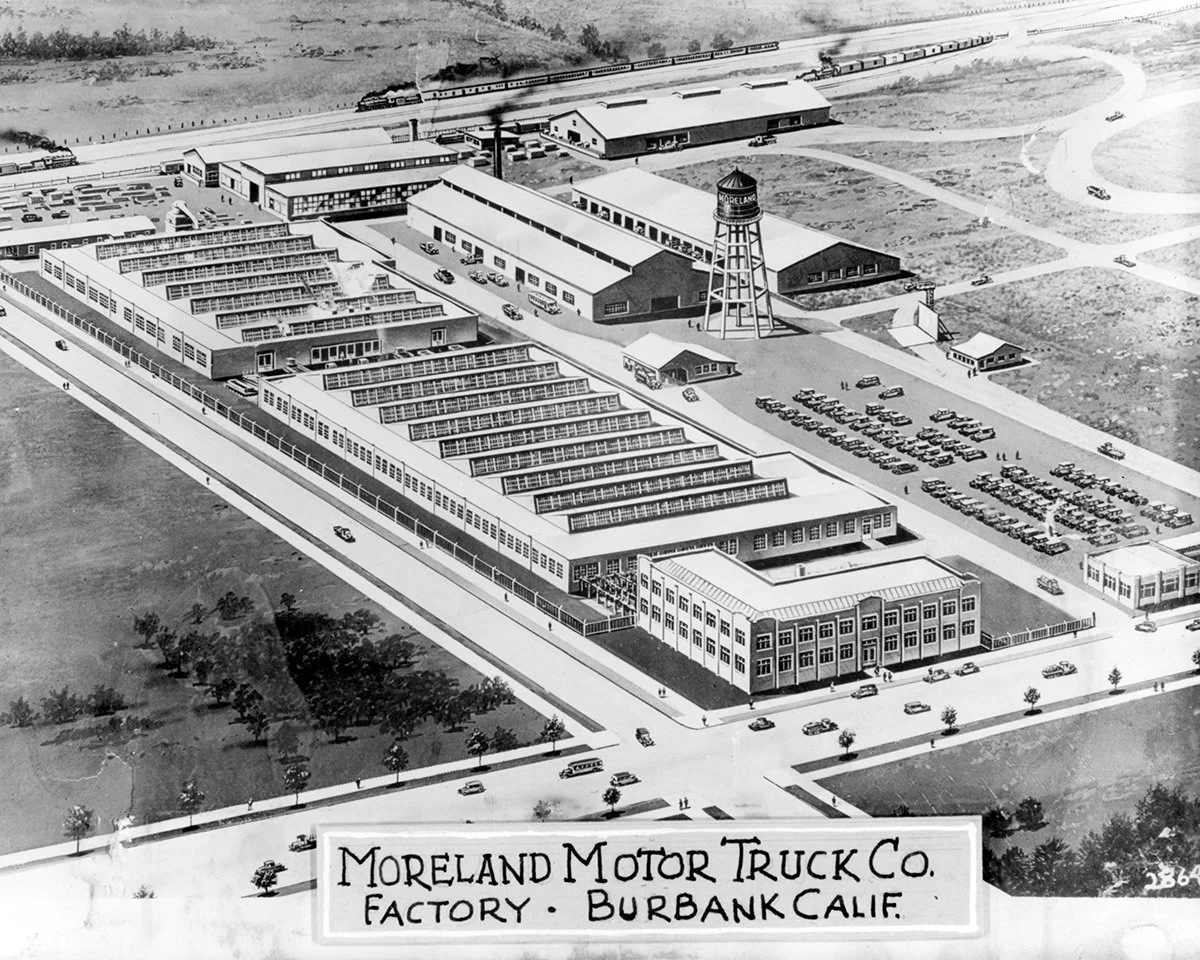
Moreland Motor Truck Company, Burbank California
In the early 1900s, Burbank, California, was little more than a sleepy collection of sheep ranches and fruit orchards. But in 1917, a deal was struck that would forever change the DNA of the city—and the American trucking industry. That deal brought the Moreland Motor Truck Company to town, sparking an industrial revolution that paved the way for aviation giants and the modern long-haul logistics we take for granted today.
The Visionary Behind the Wheel
The story begins with Watt L. Moreland, a pioneer who saw that the future of American commerce lay not on rails, but on rubber. After establishing his company in Los Angeles in 1911, Moreland quickly outgrew his quarters.
Burbank city officials, desperate to transition from an agricultural hub to an industrial powerhouse, offered Moreland an irresistible deal: 25 acres of free land at the corner of San Fernando Road and Alameda Avenue. The city even raised $25,000—a small fortune at the time—to secure the land from local farmers.
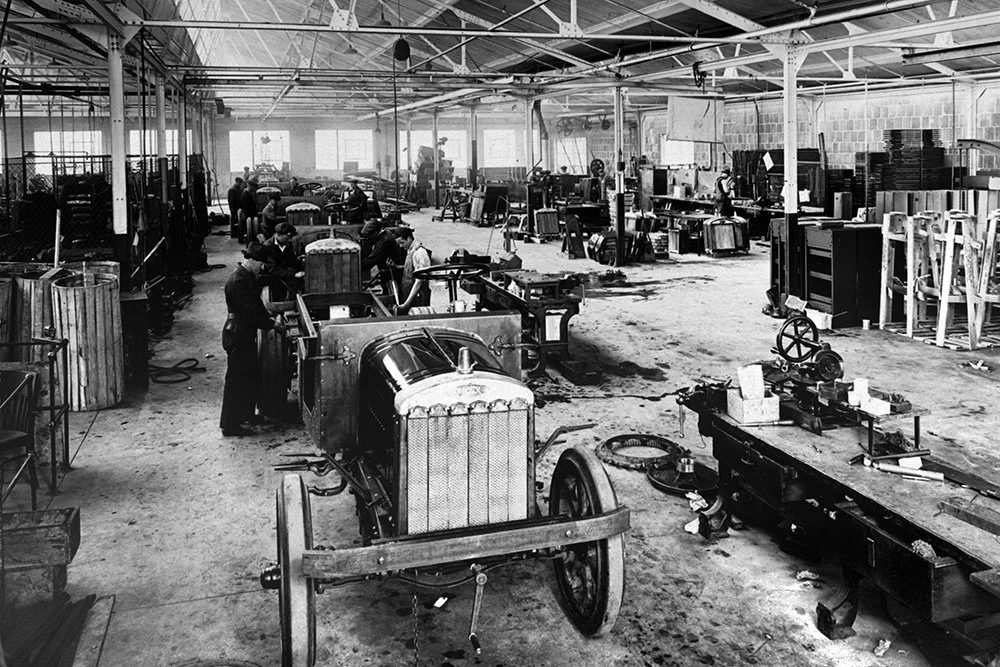
Make it stand out
Innovation: The "Western Truck"
Moreland wasn’t just building vehicles; he was inventing the "Western Truck." Unlike the light-duty trucks common on the East Coast, Western terrain required muscle.
The Six-Wheeler Revolution: In 1924, Moreland introduced one of the first successful six-wheel (tandem rear axle) chassis. This innovation allowed for much heavier payloads and better traction, essentially birthing the concept of the long-haul semi-truck.
The Gasifier: Decades before "alternative fuels" were a buzzword, Moreland developed the "Gasifier," an intake manifold that allowed gasoline engines to run on cheaper, lower-grade distillates like kerosene.
Diesel Pioneers: By the late 1930s, Moreland was among the first to offer Cummins diesel engines, pushing the limits of fuel efficiency and power.
Impact on the United States: Setting the Standard
Moreland’s influence reached far beyond the San Fernando Valley. By the 1920s, his trucks were exported to Australia, South America, and the Philippines.
Moreland was more than a manufacturer; he was a lobbyist for the modern road. He frequently traveled to Washington D.C. and Sacramento to advocate for better highway legislation and weight allowances that recognized the safety and efficiency of his six-wheel designs. Every time you see a modern 18-wheeler on the I-5, you're seeing the DNA of Watt Moreland’s early designs.
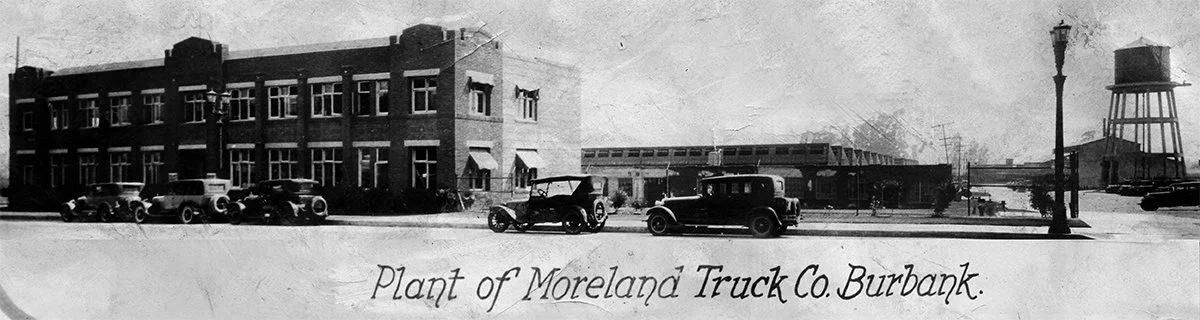
Plant of Moreland Truck Co Burbank
Impact on Burbank: The Industrial "Floodgates"
The arrival of Moreland was the "big bang" for Burbank’s economy. It proved that the city could support massive manufacturing operations.
"The relocation of the Moreland Company to Burbank opened up the floodgates for other companies to establish factories in the city." — City of Burbank Historic Context Report
Following Moreland’s lead, companies like Libby, McNeil & Libby (canning) and Andrew Jergins (soap) moved in. Most importantly, the infrastructure and skilled labor pool created by Moreland eventually attracted the Lockheed Aircraft Company. In fact, during World War II, the Moreland plant was absorbed by Lockheed’s Vega subsidiary to build warplanes.
The Legacy
The Great Depression and wartime material shortages eventually brought truck production to a halt in 1941. Though the original factory buildings were demolished in 1999, the legacy remains.
Moreland Truck Company transformed Burbank from a rural outpost into a global manufacturing hub. It took the trucking industry out of the "horse and buggy" mindset and into the era of heavy-duty, long-distance transport. The next time you see a "Burbank" label on a piece of media or technology, remember that it all started with a heavy-duty truck and a 25-acre field of dreams.
Did you know? Moreland trucks were so rugged they were the preferred choice for early fire departments and logging companies across the Pacific Northwest!
