
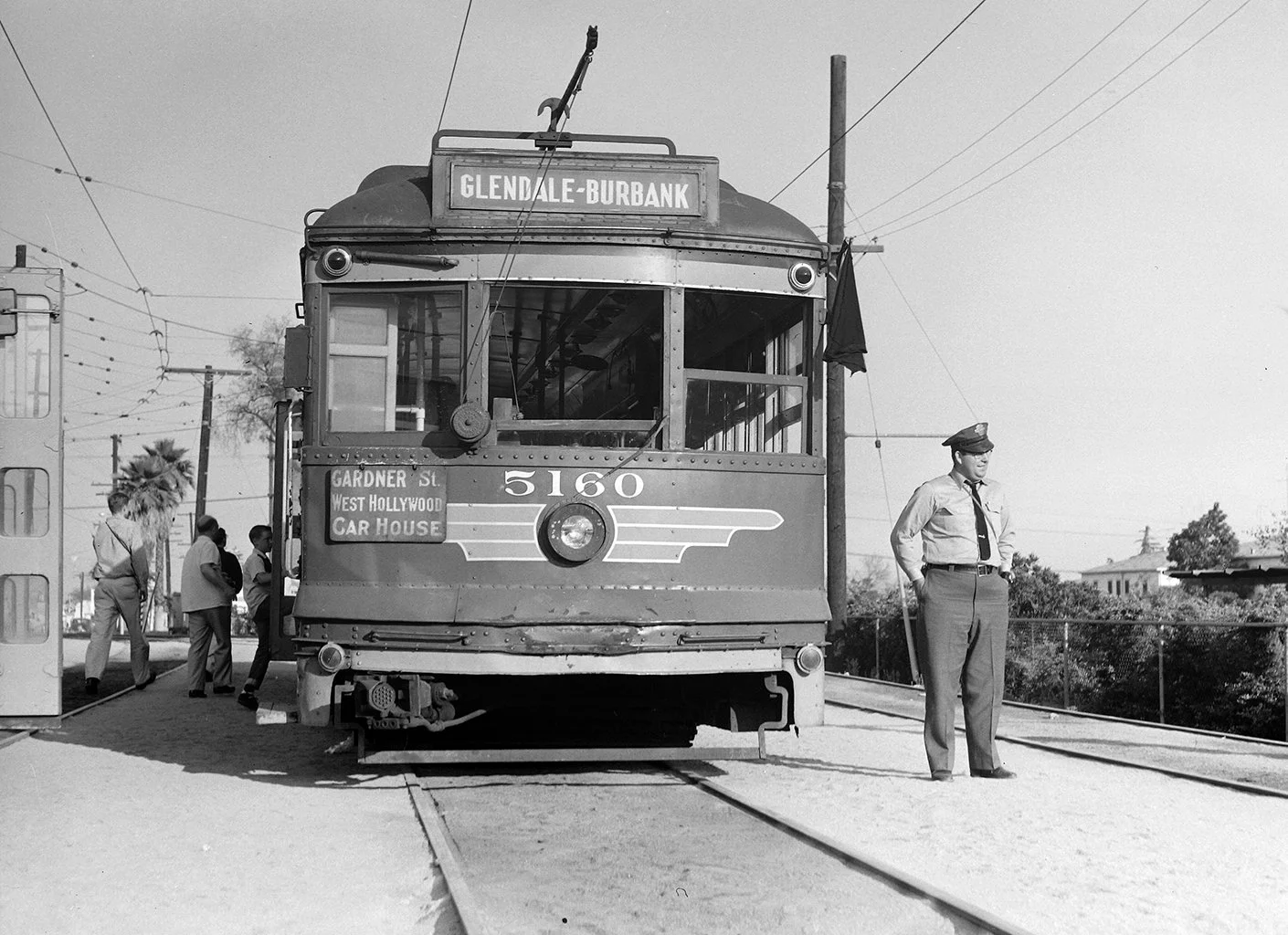
Burbank Red Car 1950s
Let’s step back into an era when Los Angeles wasn’t defined by gridlock, but by the hum of an electric motor and the iconic chime of a trolley bell.
Long before the Golden State Freeway cut through the San Fernando Valley, Burbank was connected to Downtown Los Angeles by one of the most advanced light-rail lines of its time: The Pacific Electric "Red Cars".
Here is the story of Burbank’s forgotten transit era, and how a rural farming community got hooked up to the largest electric railway system in the world.
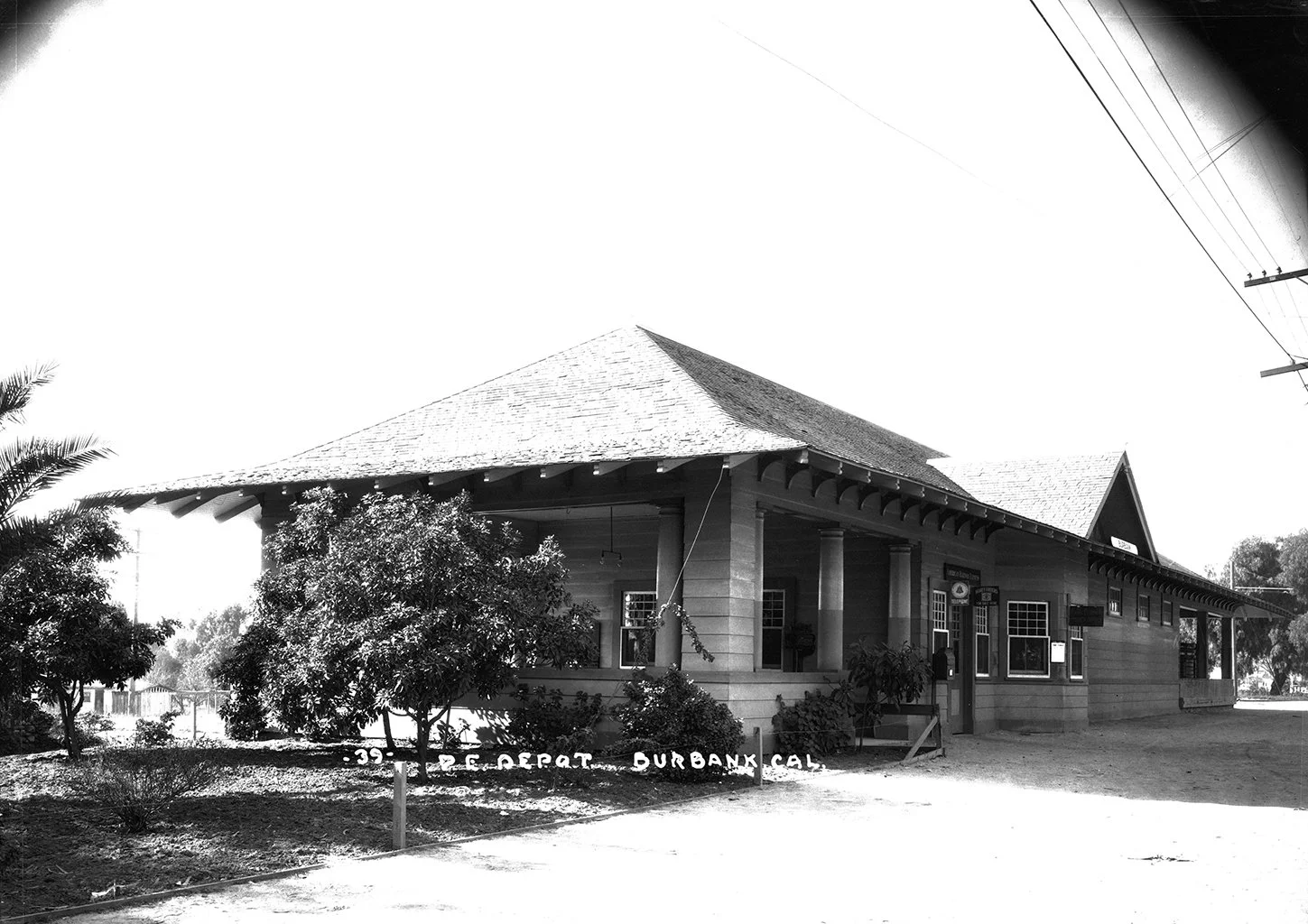
Pacific Electric Depot Glenoaks and Orange Grove Burbank
The Day the Future Arrived: September 5, 1911
In early 1911, Burbank was a newly incorporated, largely rural town filled with orchards and small farms. But real estate visionaries and local leaders knew that to grow, they needed a lifeline to the booming urban core of Los Angeles.
On September 5, 1911, the very first bright red trolley car rolled down Olive Avenue.
The Developer's Playbook: Like much of Southern California's early transit, the Red Cars weren't built just to move people—they were built to sell houses. Tycoons like Henry Huntington laid tracks into empty fields, knowing that where the trolley went, buyers would follow.
By 1925, the Burbank line was extended further up Glenoaks Boulevard to Eton Drive (Ben Mar Hills), fueled entirely by local real estate subsidies.
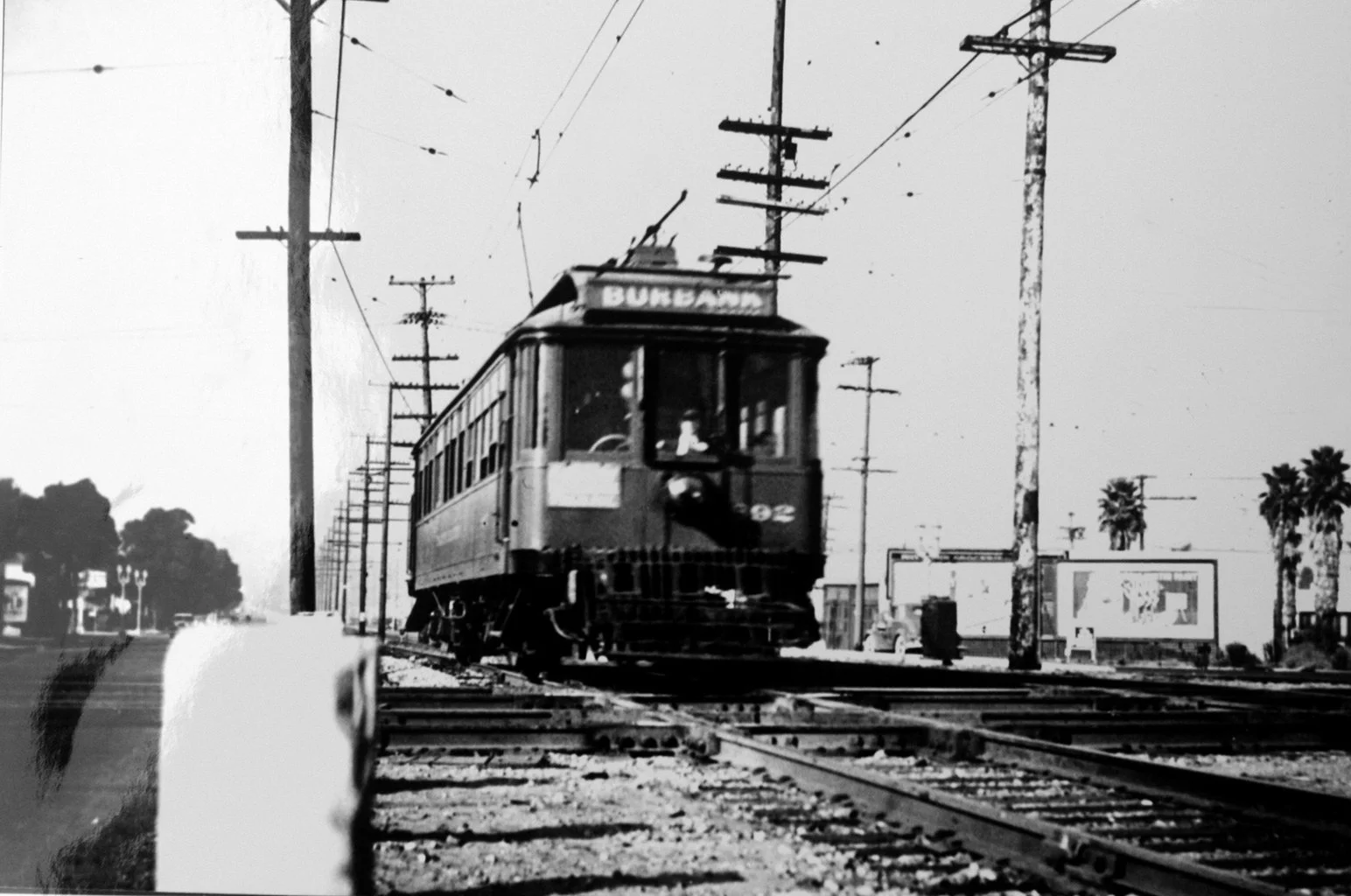
Rocket Ships on Rails: The Glendale-Burbank PCCs
While many Red Car lines shared the dirt roads with early automobiles, the Glendale–Burbank Line was a premium, high-speed operation.
In 1940, Pacific Electric completely rebuilt the line and introduced a fleet of revolutionary, double-ended PCC (Presidents’ Conference Committee) streetcars. Streamlined, incredibly smooth, and strikingly beautiful, these cars were the high-tech marvels of their day.
Because so much of the route sat on its own private right-of-way, commuters could bypass street traffic entirely. After rocketing across a massive wooden trestle over Fletcher Drive and a steel bridge over the LA River, the Red Cars plunged into a mile-long subway tunnel, dropping passengers right into the basement of the Downtown Subway Terminal Building.
It was fast, efficient, and clean. During World War II, when gas and rubber were heavily rationed, these three-car trolley trains were packed to the brim with workers keeping the region moving.
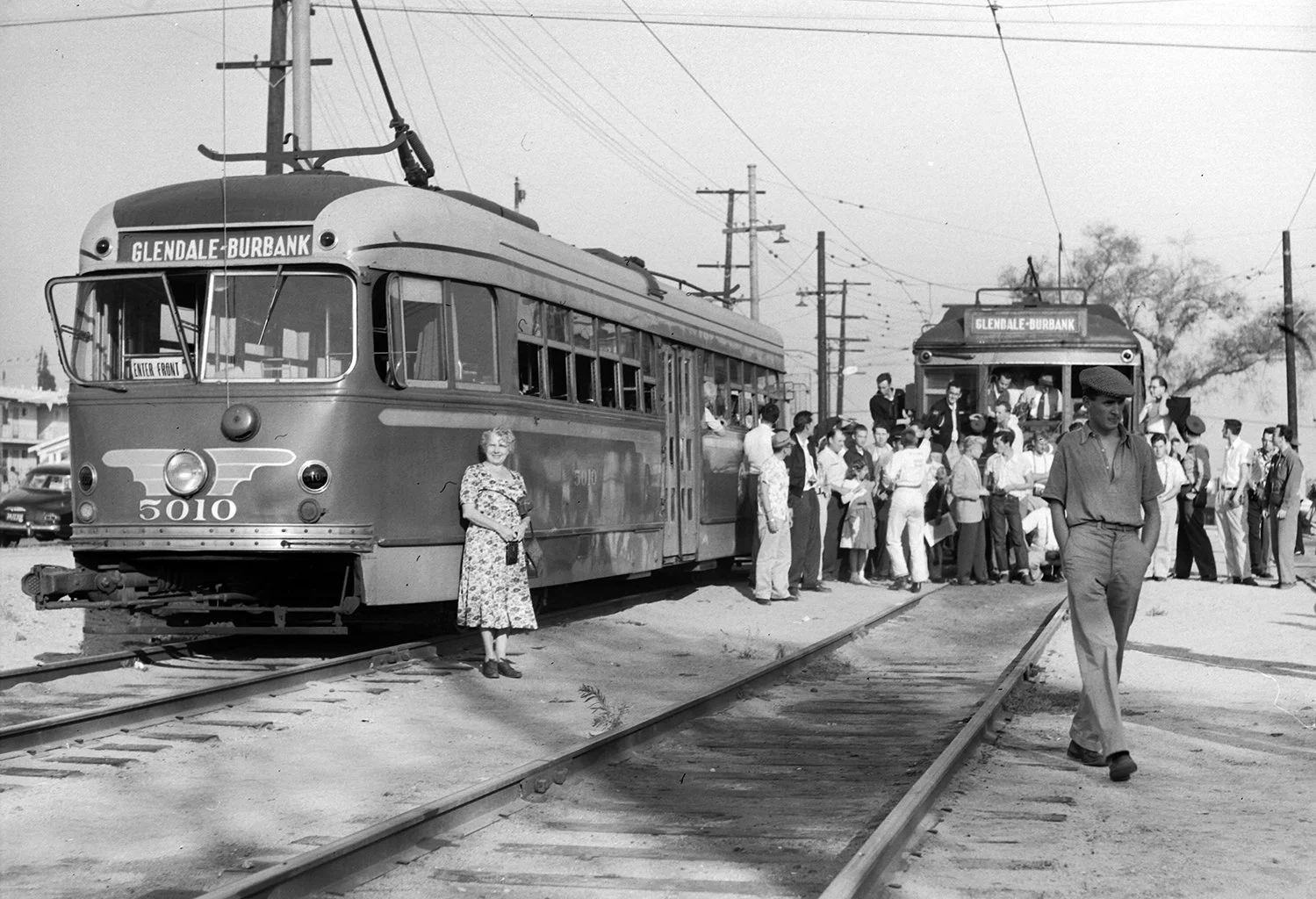
Pacific Electric Red Car Last Day of Service 1955
Why Did the Red Cars Vanish?
If the system was so great, why don't we see them running down Glenoaks today?
It’s a mix of changing priorities and corporate maneuvering. In 1953, Pacific Electric sold its passenger operations to Metropolitan Coach Lines, a management company whose explicit goal was to replace rail with buses.
At the same time, post-war car culture was exploding. Southern California began building its massive freeway network, prioritizing personal automobiles over public tracks. The glorious infrastructure that made the Burbank line special was systematically dismantled.
On June 19, 1955, the Burbank Red Car line was officially abandoned. The gorgeous PCC cars were packed up and sold to Buenos Aires, Argentina, and by 1959, the iconic bridges over the LA River and Riverside Drive were completely torn down.
The Ghost Lines Left Behind
While the tracks are gone, the Red Cars left a permanent blueprint on Burbank's geography.
Next time you drive down Glenoaks Boulevard, look at the unusually wide, landscaped center median dividing the traffic lanes. That beautiful green space exists because it’s exactly where the Red Cars used to run on their private tracks.
The transit system of the past built the layout of the city we live in today.
